Wall Street Is Changing the Question
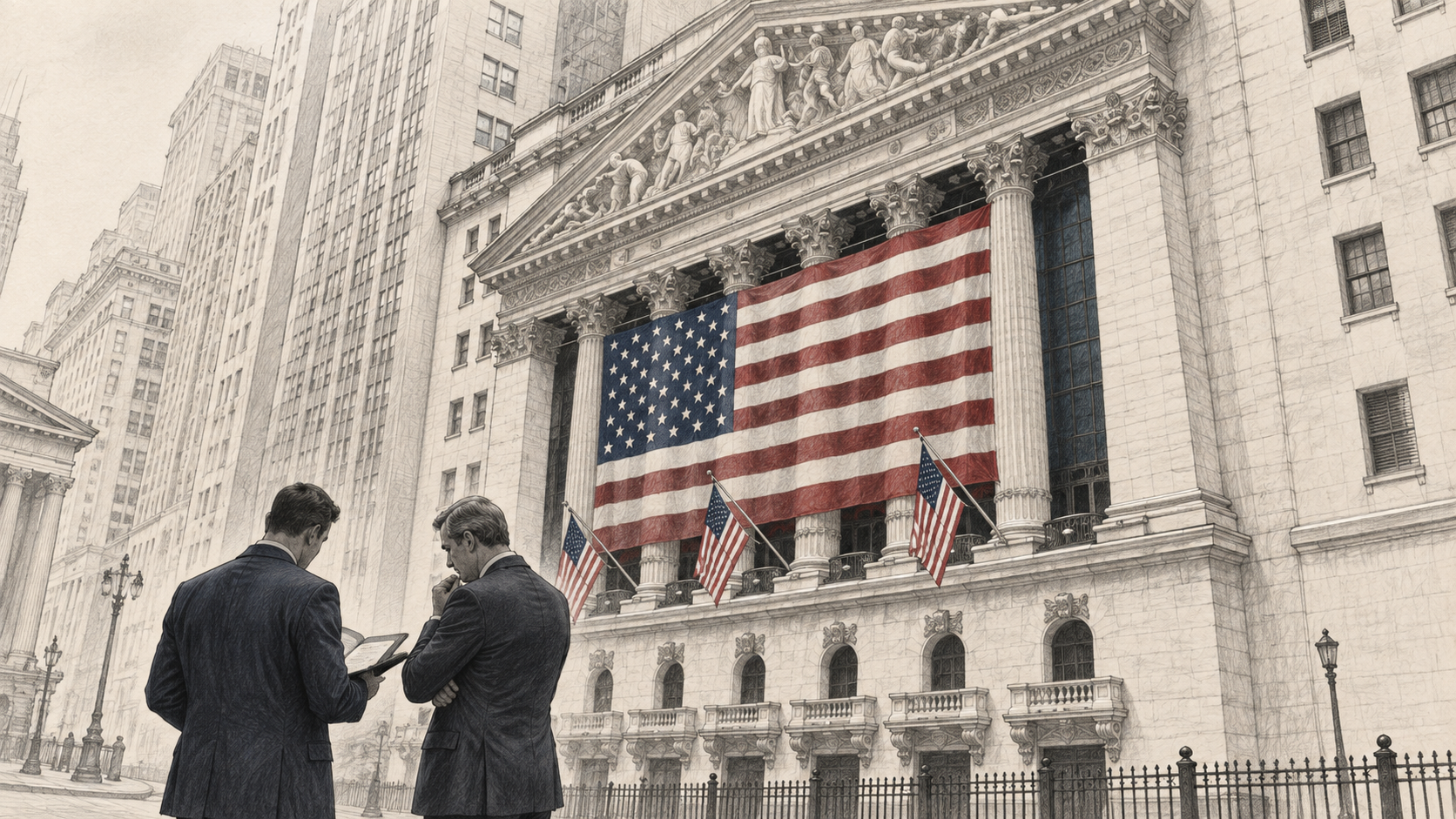
Delayed IPOs are testing the price investors will pay for technological promise.
Wall Street was preparing to sell another season of technological ambition. Now several companies are delaying their stock market debuts and investors are questioning the price. The shift raises a larger question: is confidence in growth weakening or is capital demanding stronger evidence before paying for a future that has yet to arrive?
A company can remain promising while its proposed valuation becomes harder to defend. From wearable devices to AI, the business models differ. The question of price connects them.
🟥 Is the IPO window closing—or is the price wrong?
Oura postponed its offering amid market uncertainty. Reporting also points to investor resistance to its proposed valuation. A difficult market can justify waiting. An unconvincing price may require adjustment. Calling both “uncertainty” leaves the harder negotiation unresolved.
🟥 How much future growth should investors pay for today?
A valuation brings tomorrow’s expected earnings into today’s price. The further away those earnings sit, the more depends on assumptions about demand, competition and execution. Technological potential can support those assumptions. It cannot settle them. The friction appears when companies seek payment for scale that investors still regard as a possibility.
🟥 Does enthusiasm for AI extend to every AI investment?
Oura’s wearable and subscription business is distinct from the economics of AI developers. But AI offerings face their own version of the valuation question.
Investors can believe AI will reshape the economy and still question an individual company’s business model. Models, computing infrastructure and applications face different costs and competitive pressures. A powerful sector narrative can attract attention while leaving the investment case incomplete.
🟥 Is the offering financing expansion—or providing an exit?
According to Oura’s SEC filing, existing shareholders would sell 36.5 million of the 50 million shares offered: 73 percent. None of the proceeds from those shareholder sales would go to the company to fund growth, research or operations.
Providing liquidity is a legitimate market function. But buyers should distinguish money entering the business from money changing hands between owners. The headline size of an IPO can obscure that difference.
🟥 Does greater discipline strengthen innovation—or constrain it?
More demanding investors can force clearer assumptions and more credible prices. They can also make ambitious projects harder to finance before their economics mature. Waiting preserves a company’s preferred valuation only while it can afford to wait. The pressure sharpens when the timetable for raising money overtakes the timetable for proving the business.
For founders, the practical question is how long they can wait—and what concessions become necessary if they cannot. A lower valuation, different financing terms or a smaller offering may become the price of moving forward. For investors, the task is to distinguish a cheaper opportunity from a weaker business.
Technological ambition may still attract capital. The promise alone may command less of a premium.
Credit
AI-generated illustration by OpenAI for Altair Media.
Caption
Investors weigh a prospectus outside the New York Stock Exchange. An editorial illustration of Wall Street’s changing question: what price should technological promise command?
