
As hyperscale cloud infrastructure becomes part of the foundation of modern government, digital sovereignty is evolving into a global strategic challenge. Meridian Exchange 2026 explores how governance, resilience and trusted digital ecosystems may shape the next era of national infrastructure.
Artificial Intelligence
Artificial intelligence is transforming how systems operate — from decision-making and productivity to the structure of markets and organisations.

Artificial intelligence is transforming datacentres from collections of processors into vast communication systems. As copper approaches its practical limits, integrated photonics may become the next infrastructure layer enabling the continued scaling of AI.
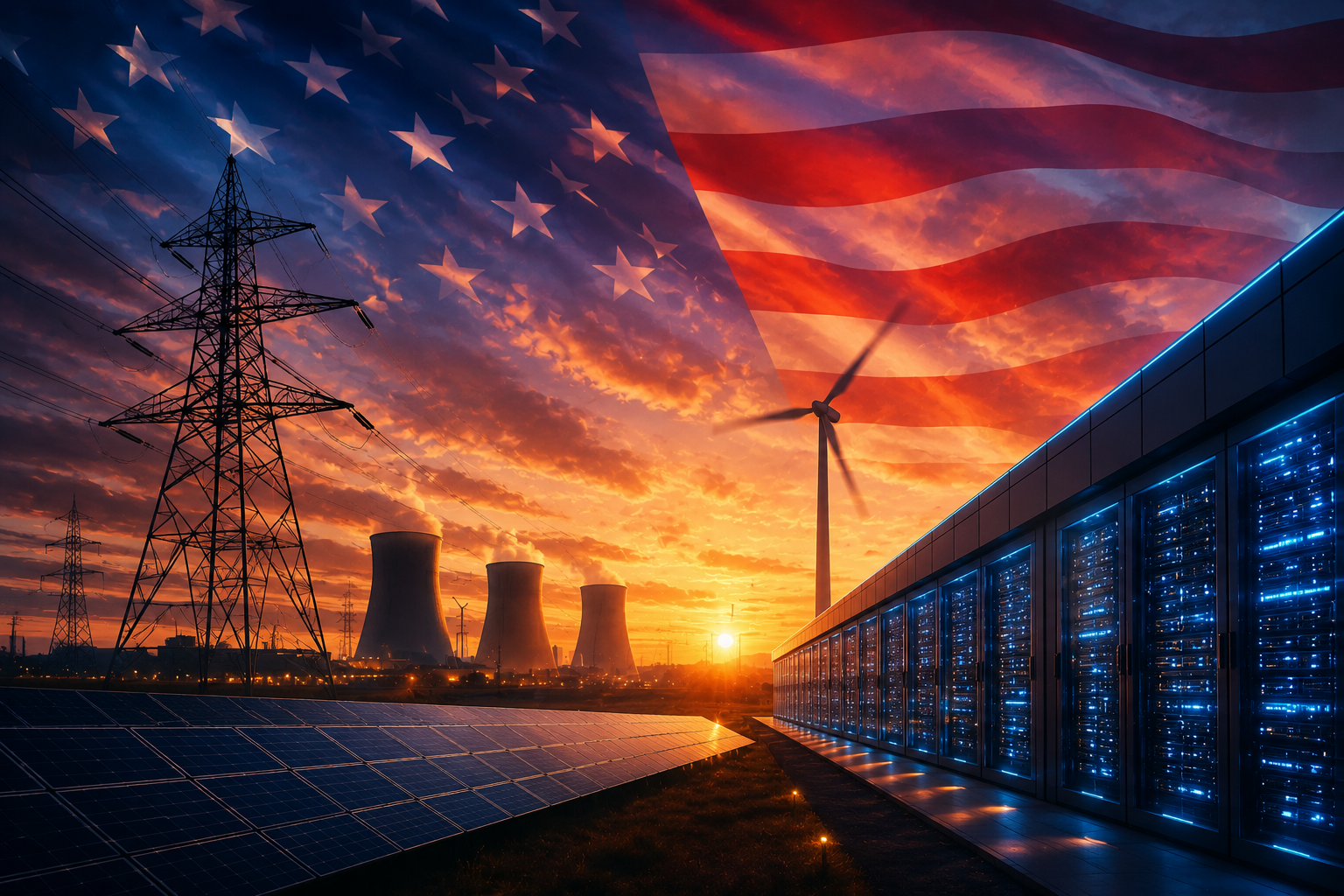
Artificial intelligence is often described as a software revolution. Yet behind every AI model lies a growing demand for electricity. As data centres expand and computing capacity increases, energy is emerging as one of the most important foundations of the digital economy. The future of AI may depend not only on algorithms, but also on the systems that generate and deliver power.

Europe’s new technology strategy is not about decoupling from the United States. It is about becoming indispensable within the infrastructures, supply chains and innovation ecosystems that underpin the digital economy, reshaping the future of transatlantic technological cooperation and resilience.

Nvidia’s five-trillion-dollar valuation raises a question that extends far beyond technology. Are financial markets measuring real economic value, or are they increasingly pricing collective expectations about a future that has not yet arrived?

As robots become more capable, the most important questions may no longer be technological. This article explores how societies can balance automation, human responsibility and meaning in a future increasingly shaped by intelligent machines and autonomous systems.
