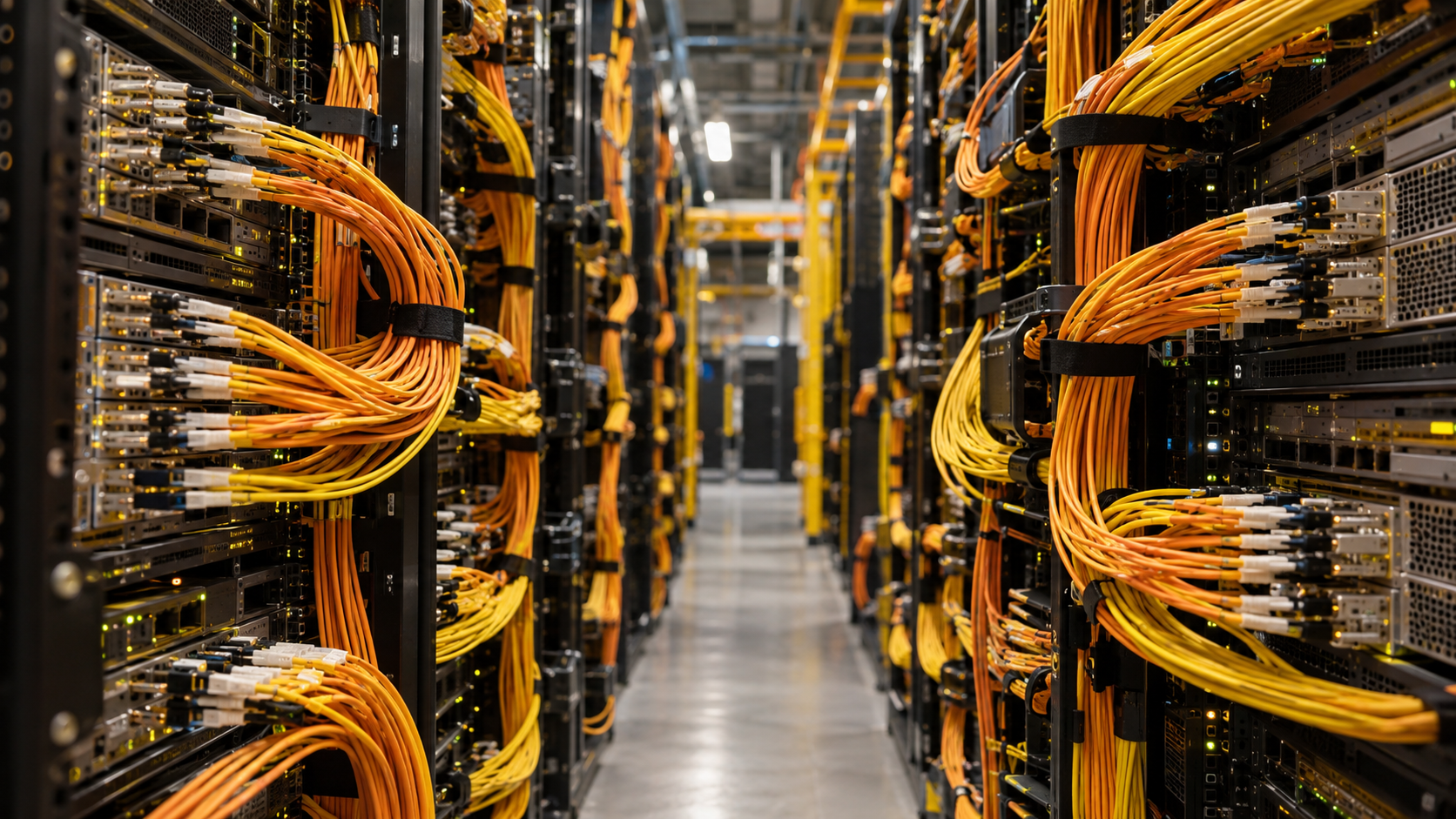
Lightmatter’s Passage L20 CPX points to a deeper shift in AI infrastructure. As compute scales, photonics is moving beyond performance breakthroughs toward standardized interfaces, interoperable components and the industrial architecture required to connect ever-larger AI systems.
Photonics
Light-based technologies are redefining the speed, capacity and limits of digital infrastructure.

Artificial intelligence is pushing computing beyond the practical limits of electricity alone. As communication becomes the defining challenge of modern compute, integrated photonics may reshape the architecture of computing itself—using light to move information faster, more efficiently and with less energy.
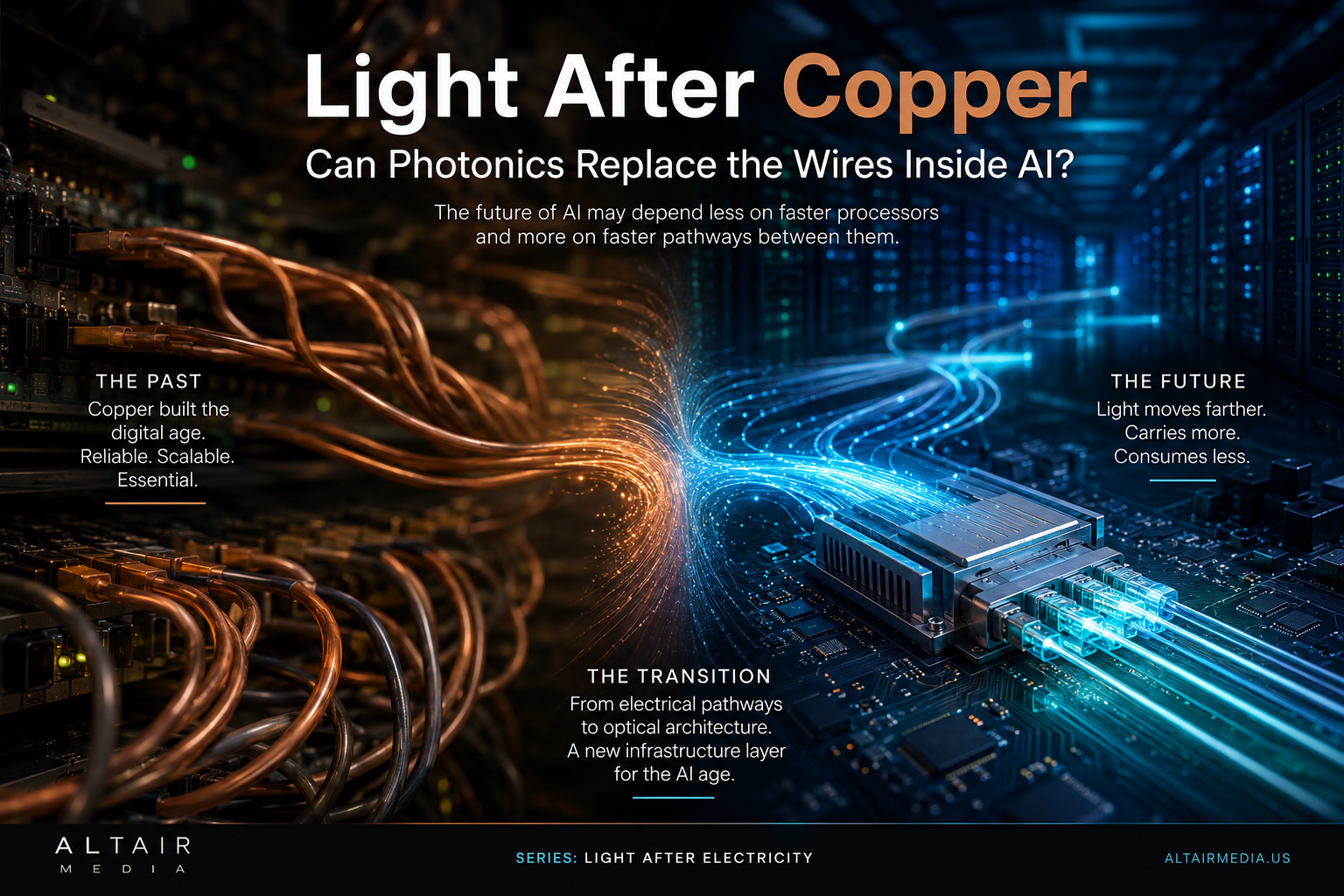
Artificial intelligence is transforming datacentres from collections of processors into vast communication systems. As copper approaches its practical limits, integrated photonics may become the next infrastructure layer enabling the continued scaling of AI.
Artificial intelligence may not be running out of ideas, but it may be approaching the practical limits of electrons. As communication becomes increasingly expensive, the future of computing may depend less on processing information and more on moving it efficiently.

Europe’s new technology strategy is not about decoupling from the United States. It is about becoming indispensable within the infrastructures, supply chains and innovation ecosystems that underpin the digital economy, reshaping the future of transatlantic technological cooperation and resilience.

Nvidia’s investments in photonics highlight a growing shift within AI infrastructure. The question is no longer simply how to build faster processors, but how to connect, package and integrate increasingly complex systems. The next bottleneck may emerge not inside the chip, but in everything surrounding it.
