AI’s Hidden Dependency: Electricity
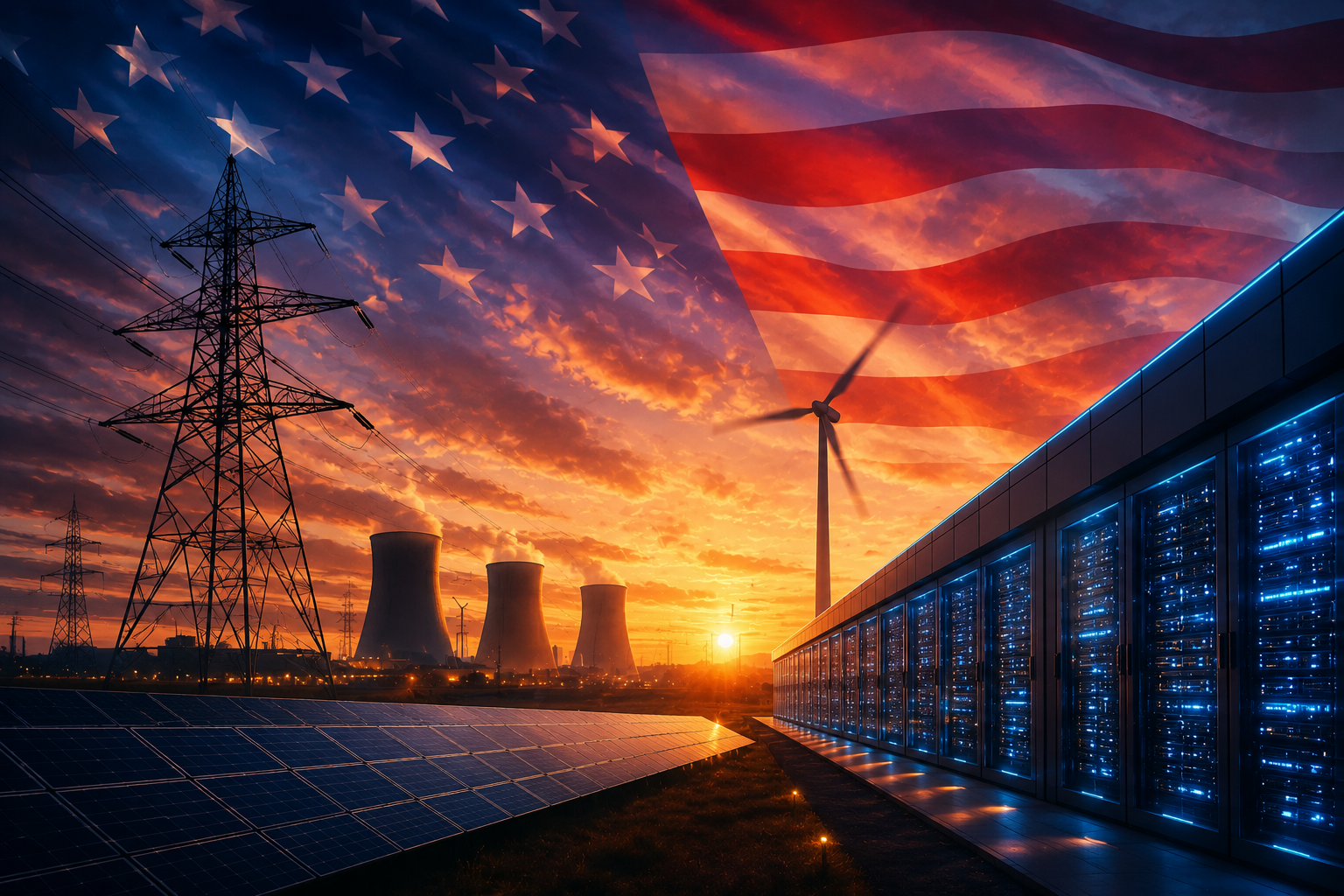
Why artificial intelligence may be becoming an energy story
Artificial intelligence is often described as a software revolution. Discussions typically focus on algorithms, models and computing power. Yet behind the rapid growth of AI lies a less visible reality. Every AI system depends upon physical systems that require enormous amounts of electricity.
For years, digital technologies appeared largely detached from the constraints that shaped previous industrial revolutions. Software could scale globally. Cloud services expanded continuously. Data flowed almost invisibly across networks. Artificial intelligence is beginning to change that perception.
As AI adoption accelerates, energy is re-emerging as a strategic factor.
“The future of AI may depend less on algorithms than on megawatts.”
The Scale of AI Growth
The growth of artificial intelligence has been extraordinary. Across major economies, technology companies are investing billions of dollars in new computing capacity while demand for AI services continues to expand.
Most public discussions focus on the capabilities of AI systems themselves. Larger models. Faster responses. More advanced reasoning. Less attention is paid to the systems required to support them.
Every query processed by an AI model requires computing resources. Every model training cycle consumes electricity. Every new generation of AI systems demands greater amounts of processing power than the generation before it.
What appears to be a digital transformation is increasingly becoming a physical one.
The Return of Electricity
For decades, electricity demand in many advanced economies grew relatively slowly. Efficiency improvements often offset increases in economic activity. Energy planners could generally forecast future demand with reasonable confidence.
Artificial intelligence is changing a relationship that many technology companies long took for granted.
For years, digital growth depended upon electrical capacity that largely remained in the background. Electricity was assumed to be available whenever additional computing power was required. Increasingly, that assumption is being tested.
Large-scale data centres are becoming significant consumers of electricity. Utilities in multiple regions are now facing demand projections that look very different from those of only a few years ago.
The challenge is not simply producing more electricity. The challenge is delivering it where and when it is needed.
When Networks Reach Their Limits
Modern economies depend upon networks. Roads move goods. Railways move people. Ports move trade. Electric grids perform a similar function for the digital economy.
For many years, the technology sector operated largely within the capacity already available. Today, however, the physical foundations of the digital economy are becoming part of the conversation.
In parts of the United States, new data centre projects are already encountering delays linked to grid capacity, transmission constraints and connection timelines. The issue is no longer limited to computing power alone. Increasingly, access to electricity is becoming part of the equation.
This does not mean that AI growth is stopping. It does suggest that future expansion may depend upon factors that exist outside the technology sector itself.
The limiting factor may no longer be the availability of software engineers or semiconductor manufacturing capacity. It may be access to electricity.
A New Strategic Question
The rise of artificial intelligence is often framed as a competition between technology companies. Yet a broader shift may be taking place.
Utilities, grid operators and energy producers are becoming increasingly important participants in the AI ecosystem. Decisions about power generation, transmission capacity and long-term energy investment are beginning to influence the pace at which digital networks can expand. This represents a notable change in perspective.
Artificial intelligence is usually discussed as a story of software and innovation. Increasingly, it may also be a story of energy.
The question facing the United States is therefore larger than how quickly AI can advance. The question is whether the systems that support it can keep pace.
Looking Beyond the Algorithm
Much of the public conversation surrounding artificial intelligence focuses on what machines can do. A different question may be becoming equally important. What makes those machines possible in the first place?
As demand for AI continues to grow, electricity is moving from the background to the foreground of the discussion. The future of artificial intelligence will undoubtedly depend upon innovation. But it may depend just as much upon the energy systems that power that innovation.
The future of artificial intelligence may be written in software. But it will be powered by electricity.
