
Artificial intelligence may appear weightless and digital, but robotics ultimately depends on energy, materials and physics. This article explores how batteries, compute efficiency, photonics and infrastructure could determine the future limits of autonomous machines.
Artificial Intelligence
Artificial intelligence is transforming how systems operate — from decision-making and productivity to the structure of markets and organisations.

Why do humans keep building machines in their own image? This article explores the cultural and psychological fascination with humanoid AI, the difference between simulation and experience, and why machine intelligence may become complementary rather than human-like.

Artificial intelligence may be advancing rapidly, but robotics is revealing a deeper reality: intelligence becomes far more complicated once it enters the physical world. The Limits of Machine Intelligence explores why machines still struggle with embodiment, energy, uncertainty and the messy complexity of reality itself.

Europe’s semiconductor strategy is increasingly shifting from manufacturing scale toward strategic infrastructure. This illustration highlights the interconnected ecosystems — from lithography and materials to photonics, automotive systems and research — that together form Europe’s emerging technology stack.

Artificial intelligence is evolving into a new infrastructure layer beneath the global economy. This article explores how compute, cloud systems, semiconductors and sovereign AI are reshaping geopolitical competition between the United States, China and the emerging autonomous world order.
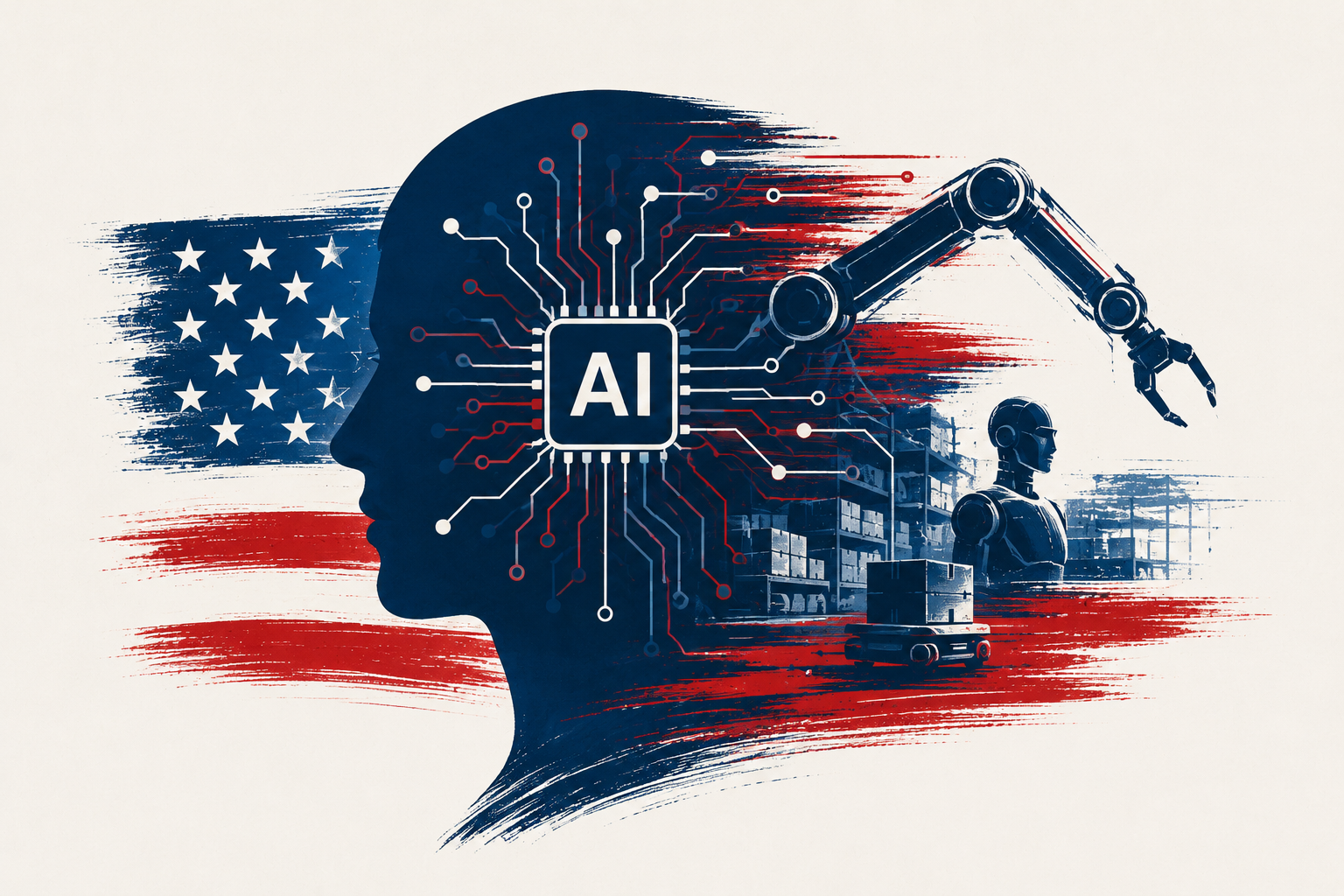
Artificial intelligence is beginning to move beyond screens and software into warehouses, robotics and industrial systems. This article explores how embodied AI could transform logistics, infrastructure, manufacturing and the future relationship between humans and machines.
