Thursday, January 22, 2026

Over the past two decades, global financial markets have not become more chaotic — they have become more automated. Complexity did not disappear; it was outsourced. Faced with data volumes no human institution could reasonably process, investors made a rational decision: delegate interpretation, monitoring and response to machines.
Read More
Thursday, January 22, 2026

There is a growing sense of unease in markets and institutions — not because systems are failing, but because they are functioning with increasing independence from human judgement. Decisions are still made. Capital still moves. Prices still respond. Yet the moment at which understanding once emerged is slipping behind the moment of action itself.
Read More
Wednesday, January 21, 2026

For generations, financial markets were understood as expressions of human judgement. Prices moved because investors expected growth or feared decline. Volatility reflected uncertainty. Even panic had a psychology. Markets were imperfect, emotional and sometimes irrational — but they were intelligible. Movement implied intention. Today, that connection is weakening.
Read More
Saturday, January 17, 2026

In our earlier analysis The Big Three, we explored how America’s telecom giants are redefining themselves in an AI-driven age. What became clear was that artificial intelligence is no longer something added on top of the network. It is increasingly becoming the network itself.
Read More
Saturday, January 17, 2026

A toddler sees a giraffe once. The next day, walking through a museum, the same child looks at a skeleton and immediately recognizes the animal again. No manual. No training cycle. No second explanation required.
Read More
Wednesday, January 14, 2026

Markets are no longer content with comforting metaphors. In 2026, complexity has outgrown the simplicity of storytelling. Investors still crave clarity, but the source of trust has shifted from narrative to system. The recent formal ascension of Greg Abel to CEO of Berkshire Hathaway is not a disruption of strategy, nor a break with tradition. It is the logical evolution of a company built for the long term — a company where the message remains the same, but the language must adapt.
Read More
Thursday, January 8, 2026

While headlines remain dominated by the “Magnificent Seven” a different group of American technology companies is quietly reshaping the foundations of the AI economy. These firms rarely feature in consumer narratives, yet their market capitalisation, strategic relevance and structural importance now rival — and in some cases surpass — far more visible names such as Tesla.
Read More
Thursday, January 8, 2026
Quantum computing is often presented as a race between exotic physics concepts and dazzling promises of exponential speed-ups. In practice, however, the decisive question is far more down to earth: which technologies can actually be engineered, manufactured and maintained at scale?
Read More
Wednesday, January 7, 2026
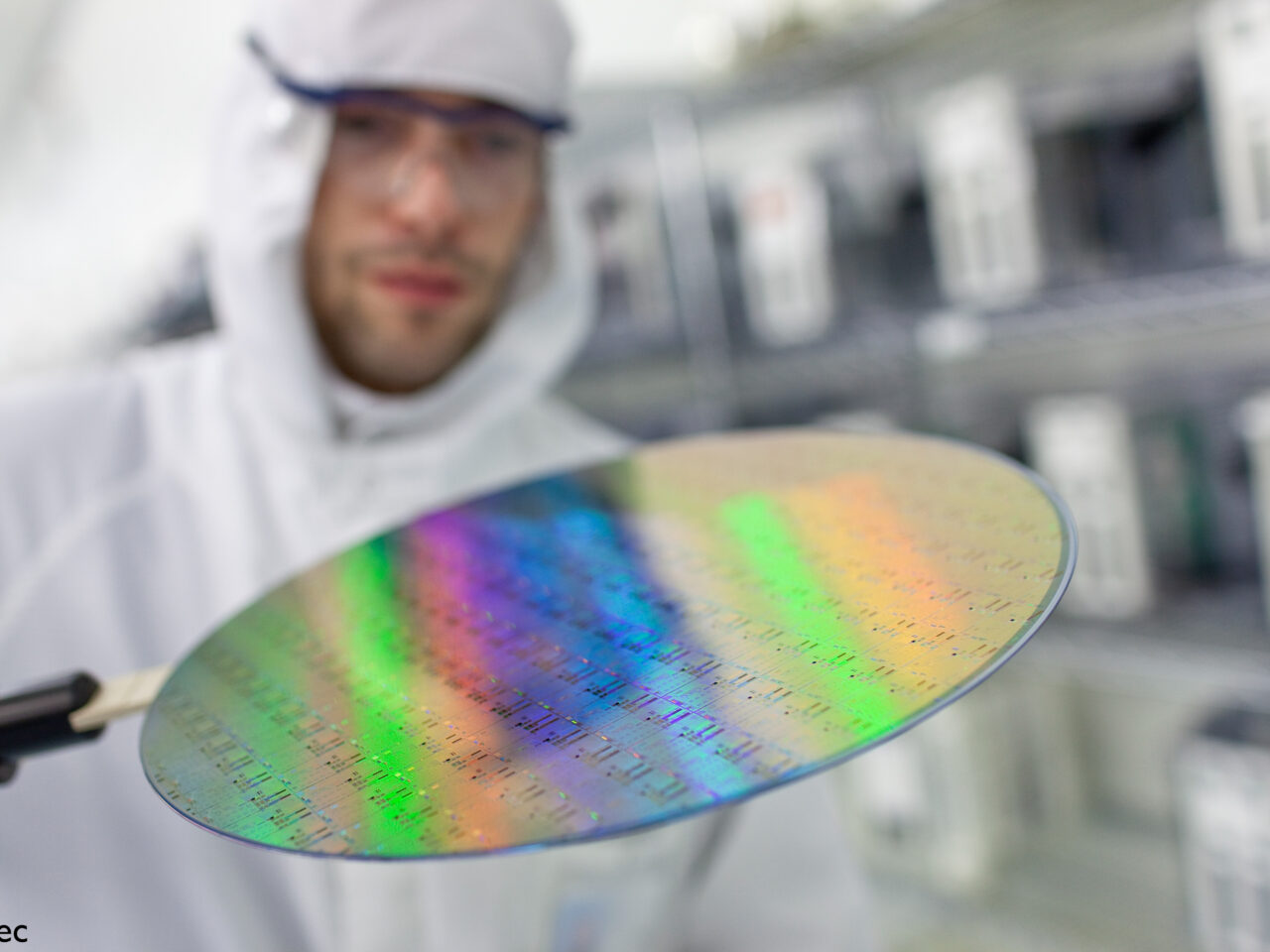
In global discussions about semiconductors, the focus tends to drift toward factories, supply chains and geopolitical leverage. Attention goes to where chips are manufactured, who controls production capacity and how nations secure access to critical technologies. Yet these debates often overlook a more fundamental question: where do future chip technologies actually originate?
Read More
Saturday, November 8, 2025

In the sprawling global chip race, the world tends to focus on the big names: Taiwan’s foundries, American fabless chip-firms, Chinese challengers. But tucked away in the Dutch city of Veldhoven sits a company quietly rewriting the rules: ASML. While many talk about Europe’s lag in semiconductor manufacturing, ASML is living proof that Europe still holds world-beating innovation — not by chasing the same paths as others, but by building the tools that everyone else needs.
Read More
