Sunday, November 30, 2025

Quantum computing has entered a new phase—one marked by bold claims, rising expectations and a growing sense that the field may be accelerating faster than the public realises. In October 2025, Google unveiled the so-called Quantum Echoes algorithm, reporting a 13,000-fold speedup on its new Willow processor compared with the world’s most powerful classical supercomputer. According to Google, this marks the first practically useful form of quantum advantage—a milestone the industry has been chasing for years.
Read More
Saturday, November 29, 2025

Quantum computing is not just the next step in computing: it is a fundamentally different paradigm. Unlike traditional computers, which use bits that are either 0 or 1, a quantum computer uses quantum bits — qubits. These qubits can exist in superposition (both 0 and 1 simultaneously) and can become entangled with one another, meaning their states become deeply linked even when separated.
Read More
Saturday, November 29, 2025

Europe is home to some of the world’s most prestigious AI faculties. Institutions like ETH Zürich, the Technical University of Munich, EPFL, Oxford and Cambridge consistently produce research that ranks among the very best globally. Their professors are leaders in fields such as robotics, neuro-symbolic AI and trustworthy AI, attracting top PhD students and forming vibrant hubs of expertise. With such talent and intellectual firepower, Europe should, on paper, be a major force in the AI landscape.
Read More
Saturday, November 29, 2025

Europe wants to protect its citizens and lead the world in responsible innovation. Yet the digital economy increasingly demands something regulators never anticipated: algorithms that grow stronger by consuming vast volumes of data. This tension has created what many now call the data trap — a space where innovators hesitate, policymakers tighten their grip and both sides wonder whether the rules that once defined Europe’s digital identity can still carry its ambitions forward.
Read More
Saturday, November 29, 2025

Southern Europe was long perceived as a follower in the race for AI and advanced computing. That perception is rapidly changing. Italy and Spain are not just catching up — they are accelerating, building a distinctive innovation corridor that combines strategic infrastructure, research depth and industrial pragmatism.
Read More
Friday, November 28, 2025

Europe’s economic strength has always depended on its people. Yet in a world where AI, deep tech and advanced manufacturing are reshaping labour markets at high speed, talent has become a strategic resource — as critical as energy or raw materials. The nations that thrive will be those that treat talent development not as an educational outcome, but as a national mission.
Read More
Friday, November 28, 2025
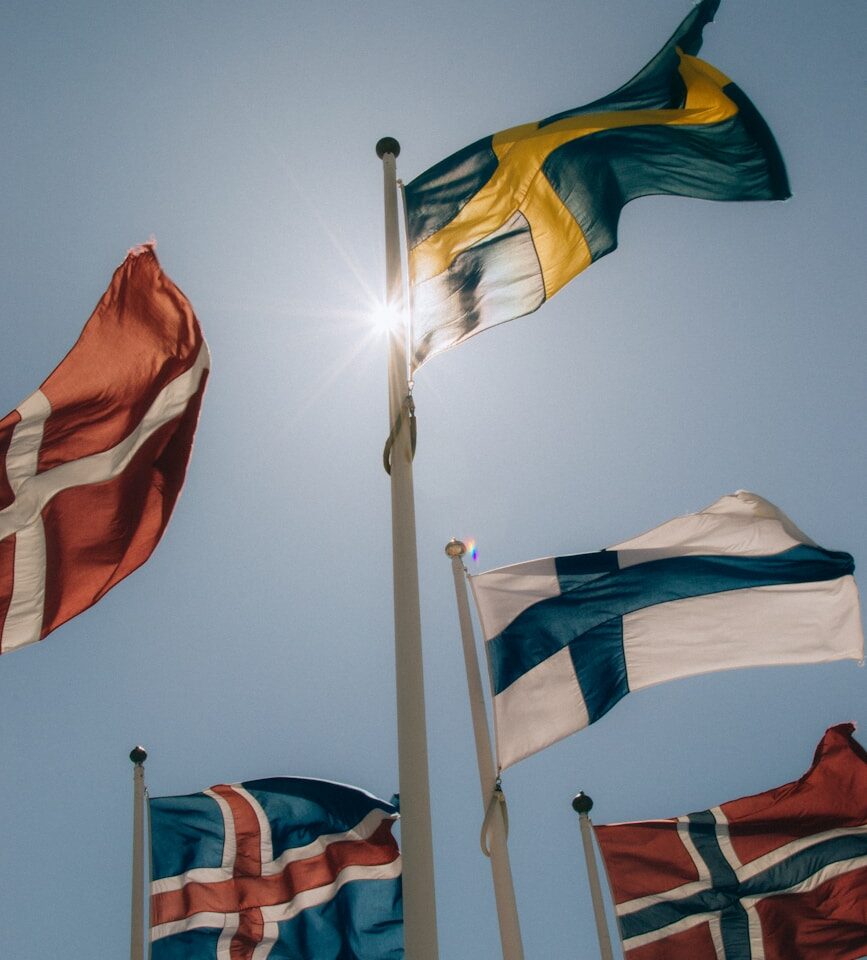
Scandinavia is not building an AI empire — it is building Europe’s most human-centric, digitally mature ecosystem. Finland and Sweden combine deep digital readiness with a pragmatic philosophy: AI is not meant to impress, but to work. Here, AI is treated not as a vision of the future, but as a public utility.
Read More
Friday, November 28, 2025

The Netherlands is not a numerical AI superpower — but it is an influential one. While other countries talk big, the Dutch build the components that keep the global system running. No hype cycles, no billion-dollar theatrics: the strength of the Netherlands lies in precision, infrastructure and reliability.
Read More
Friday, November 28, 2025

No European country concentrates more frontier AI capability per square kilometer than the United Kingdom. Nowhere else do DeepMind, OpenAI’s UK operations, Anthropic UK, Stability AI, a world-class academic cluster and an emerging safety ecosystem sit within one tightly connected corridor.
Read More
Friday, November 28, 2025

France approaches artificial intelligence not merely as a technological tool, but as an instrument of national power. Unlike Germany’s industrial pragmatism or the UK’s research-driven model, France explicitly positions AI as a lever for European sovereignty, both economically and strategically. From the government-backed Mistral AI initiative to Thales’ defence applications, Paris is asserting that Europe can—and must—control its own AI destiny
Read More
