
Nvidia is pouring billions into photonics as the future of artificial intelligence shifts beyond the GPU. Yet a growing debate suggests the next bottleneck may not lie in silicon photonics itself, but in the packaging, assembly and integration systems needed to connect AI infrastructure at unprecedented scale.
Semiconductors
Semiconductors form the foundation of modern technology, shaping industrial capacity, supply chains and geopolitical competition.

Europe’s semiconductor strategy is increasingly shifting from manufacturing scale toward strategic infrastructure. This illustration highlights the interconnected ecosystems — from lithography and materials to photonics, automotive systems and research — that together form Europe’s emerging technology stack.
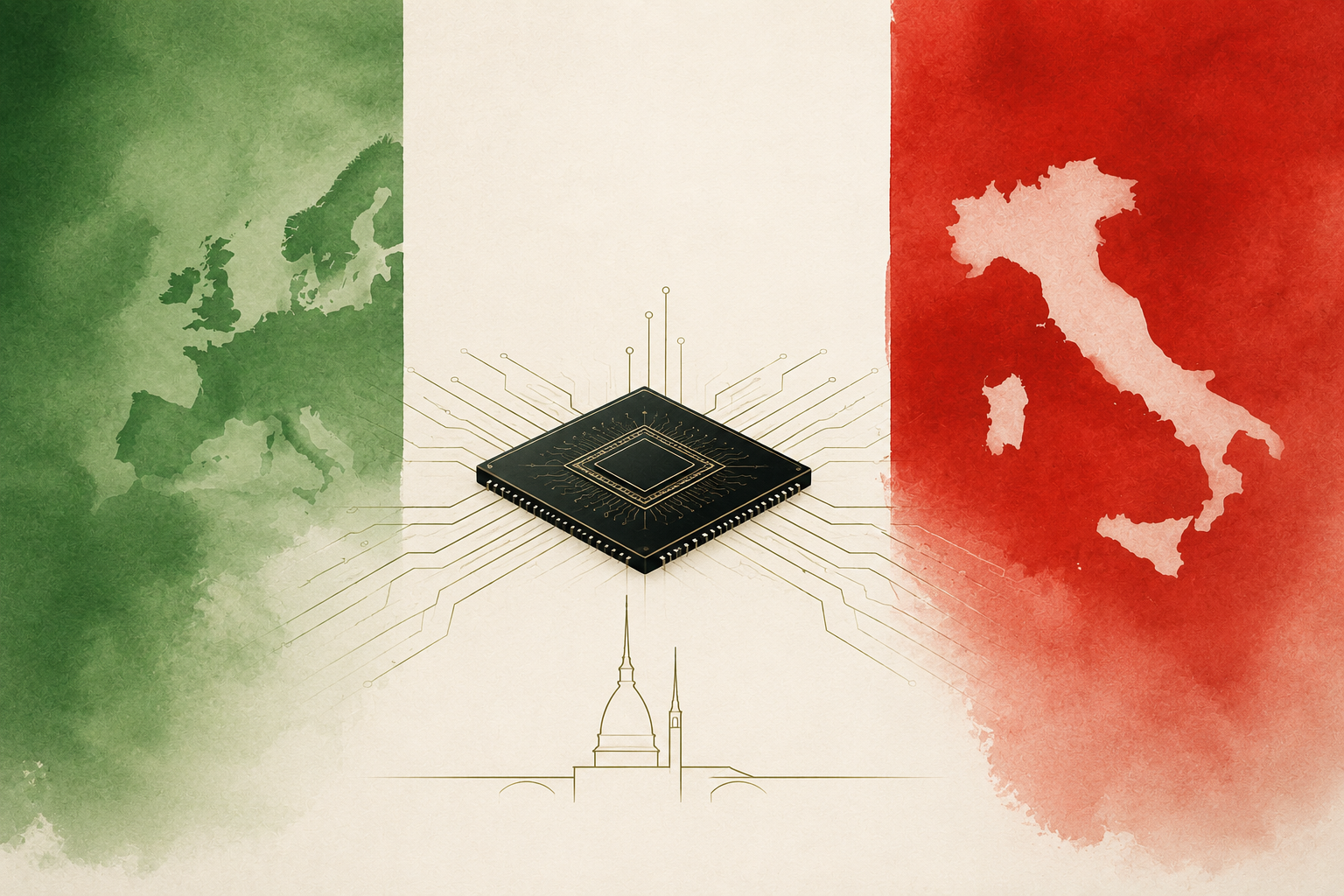
As Chips Act 2.0 begins to reshape Europe’s semiconductor ambitions, a broader strategic shift is emerging — one focused less on full technological autonomy and more on controlling the infrastructure layers underpinning the global AI economy.

In six months, over $13 billion flowed into optical technologies — not as a bet on innovation, but as a response to a growing constraint. As AI systems scale beyond the limits of copper, the real bottleneck is no longer compute, but the ability to move data. The race is shifting from GPUs to the optical supply chain that connects them.

Semiconductors are no longer inputs within the global economy — they are its defining constraint. As compute becomes the limiting factor, growth, power and innovation are increasingly determined by access to chips and the systems that produce them.

AI is pushing compute from a shared resource into a strategic asset. As demand outpaces supply, companies are no longer optimizing for access—they’re building for control, collapsing the tech stack into tightly integrated, self-owned systems.
