Tuesday, June 9, 2026

Modern finance is becoming faster, more automated and increasingly invisible. As digital systems replace human interactions, new questions emerge about financial stress, digital exclusion, trust and the ability of both younger and older generations to navigate an increasingly complex financial world.
Read More
Tuesday, June 9, 2026

America’s economy has never been larger or more financially sophisticated. Yet for many citizens, markets, debt and asset prices increasingly feel disconnected from everyday experience. This article explores how financial abstraction is reshaping the relationship between economic indicators and lived reality.
Read More
Tuesday, June 9, 2026

Digital payments, subscriptions and embedded finance have made spending faster and increasingly invisible. As friction disappears from modern finance, societies may also be losing emotional awareness around value, debt and consumption — especially inside digital environments designed to bypass hesitation itself.
Read More
Monday, June 8, 2026

Money once carried physical weight, visible limits and emotional meaning. Today it increasingly moves invisibly through apps, algorithms and digital infrastructure. As finance becomes faster and more abstract, societies may also be losing their connection to value, trust and economic reality itself.
Read More
Monday, June 8, 2026

Money was once something people could physically hold, slowly earn and consciously spend. Today it increasingly moves invisibly through digital systems, algorithms and platforms. But when money becomes abstract, societies may also begin losing their sense of value, trust and economic reality.
Read More
Wednesday, June 3, 2026
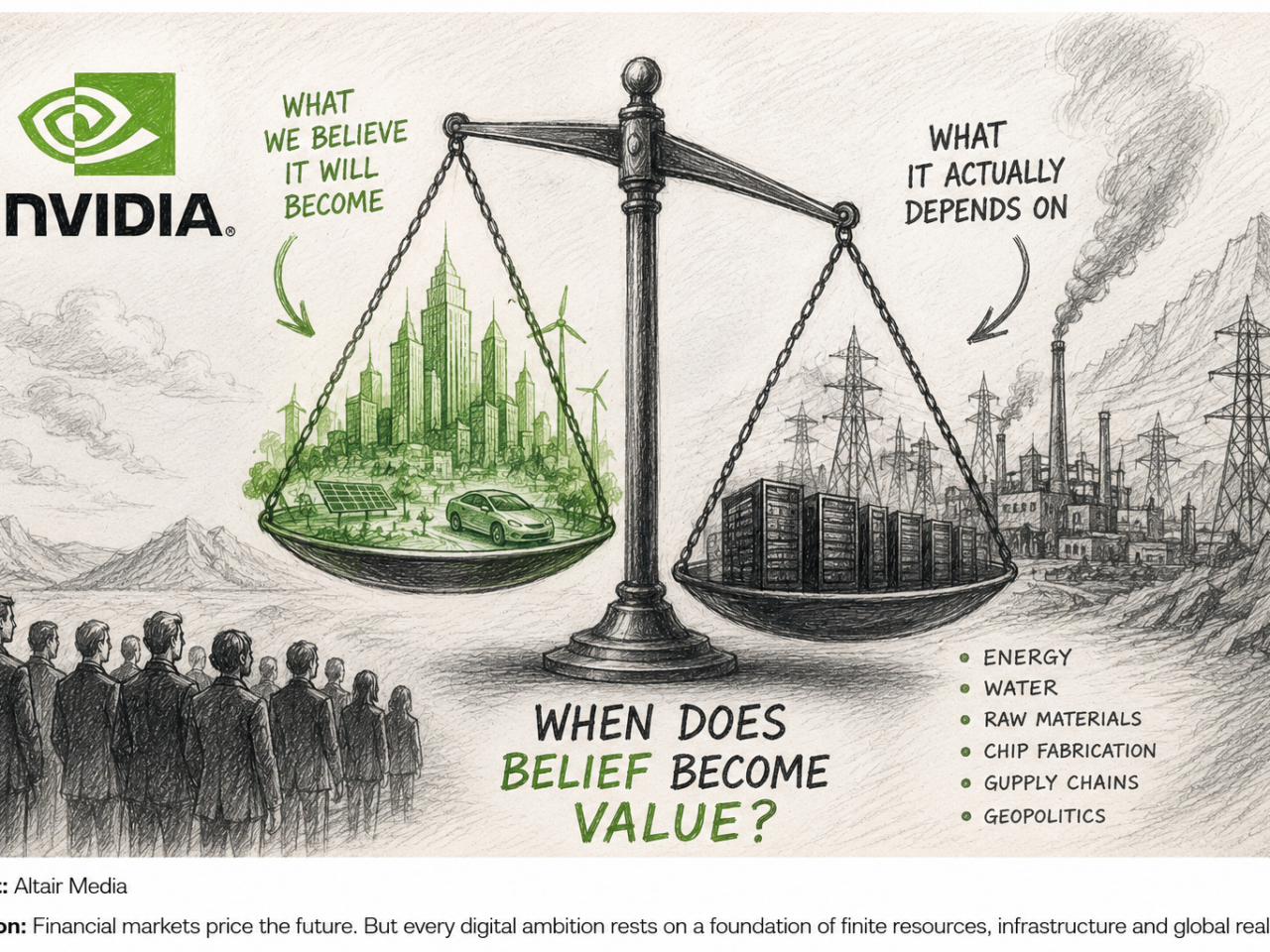
Nvidia’s five-trillion-dollar valuation raises a question that extends far beyond technology. Are financial markets measuring real economic value, or are they increasingly pricing collective expectations about a future that has not yet arrived?
Read More
