Tuesday, June 2, 2026

As robots become more capable, the most important questions may no longer be technological. This article explores how societies can balance automation, human responsibility and meaning in a future increasingly shaped by intelligent machines and autonomous systems.
Read More
Tuesday, June 2, 2026
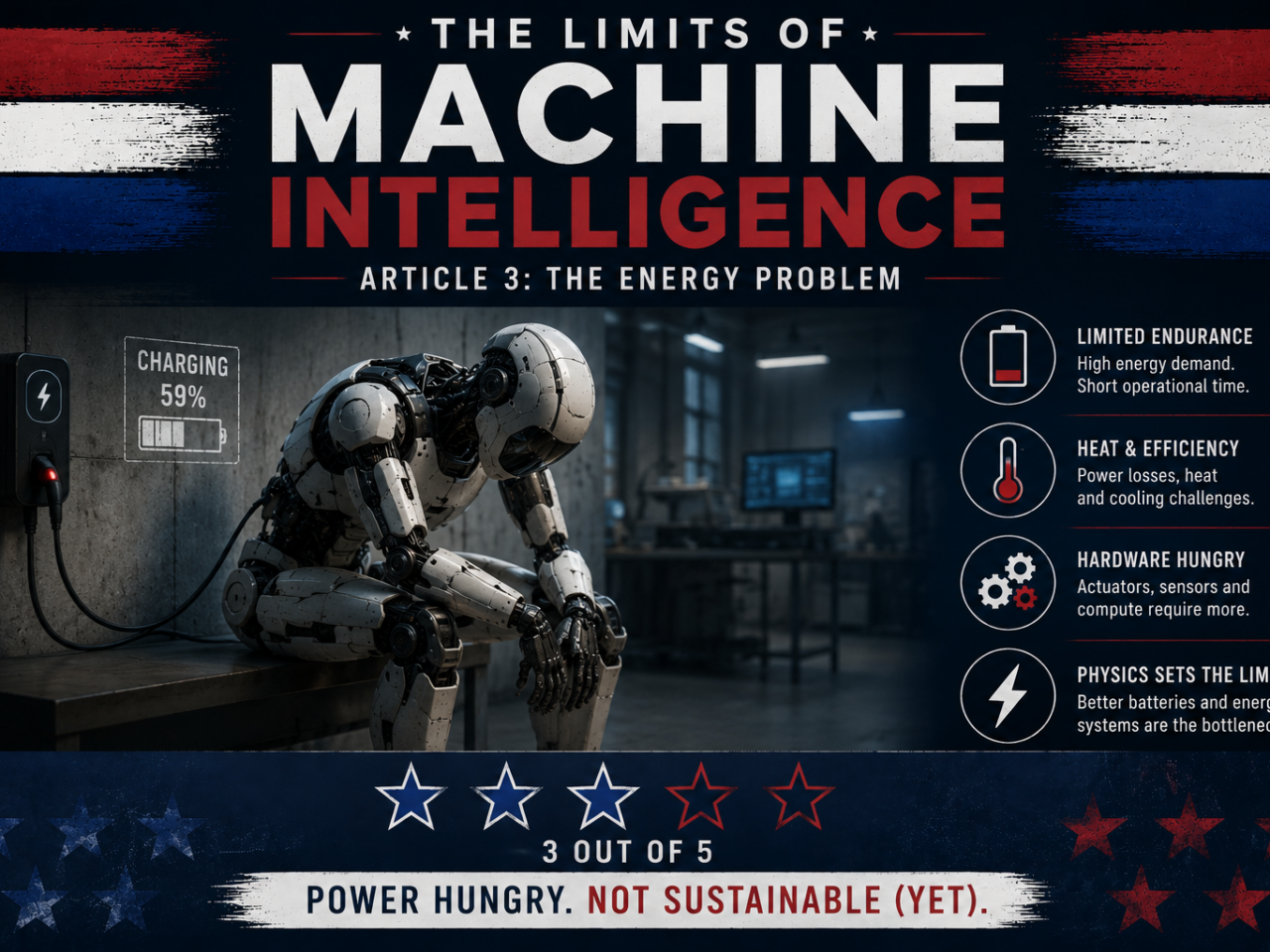
Artificial intelligence may appear weightless and digital, but robotics ultimately depends on energy, materials and physics. This article explores how batteries, compute efficiency, photonics and infrastructure could determine the future limits of autonomous machines.
Read More
Monday, June 1, 2026
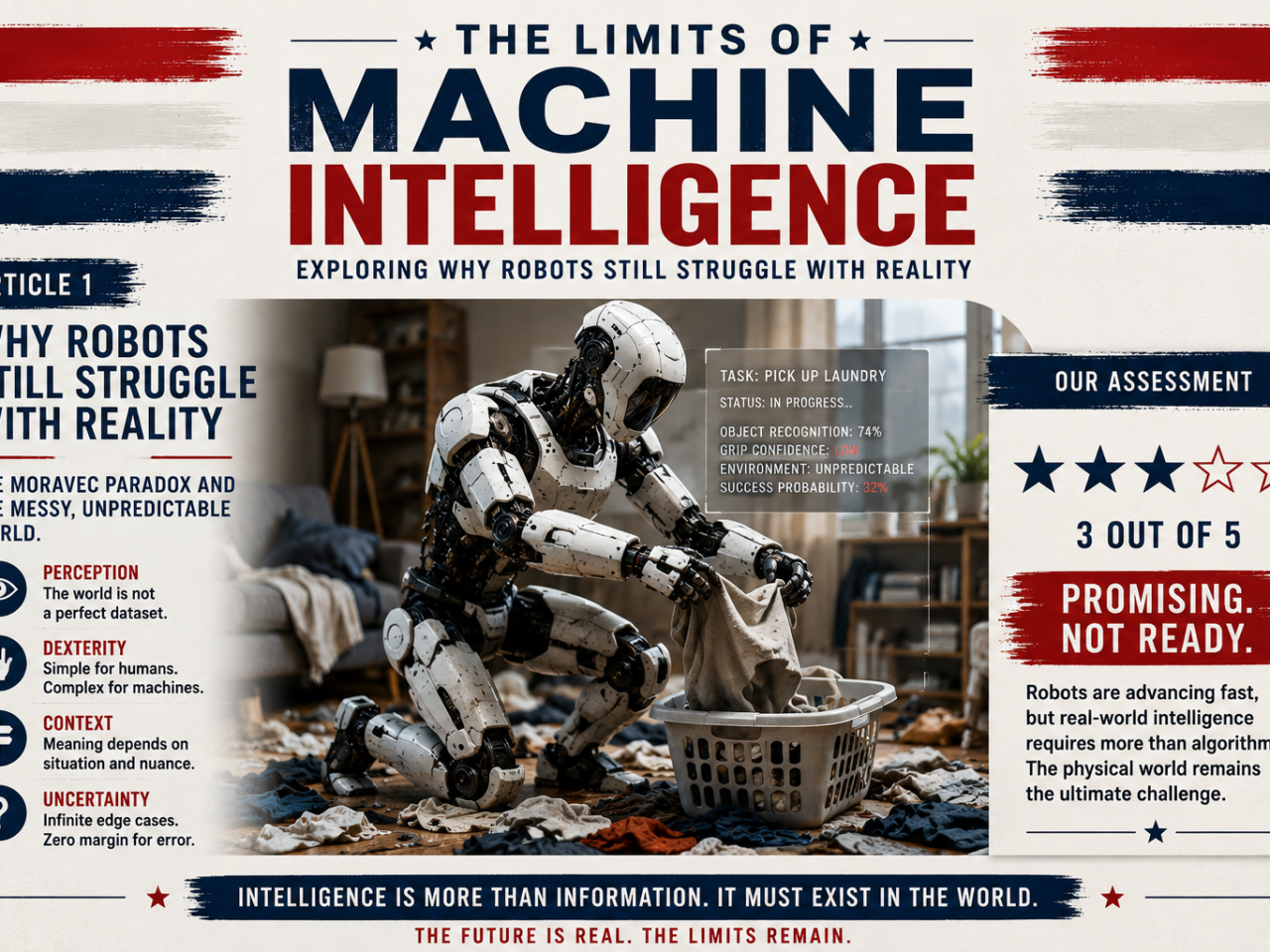
Artificial intelligence may be advancing rapidly, but robotics is revealing a deeper reality: intelligence becomes far more complicated once it enters the physical world. The Limits of Machine Intelligence explores why machines still struggle with embodiment, energy, uncertainty and the messy complexity of reality itself.
Read More
Tuesday, May 26, 2026
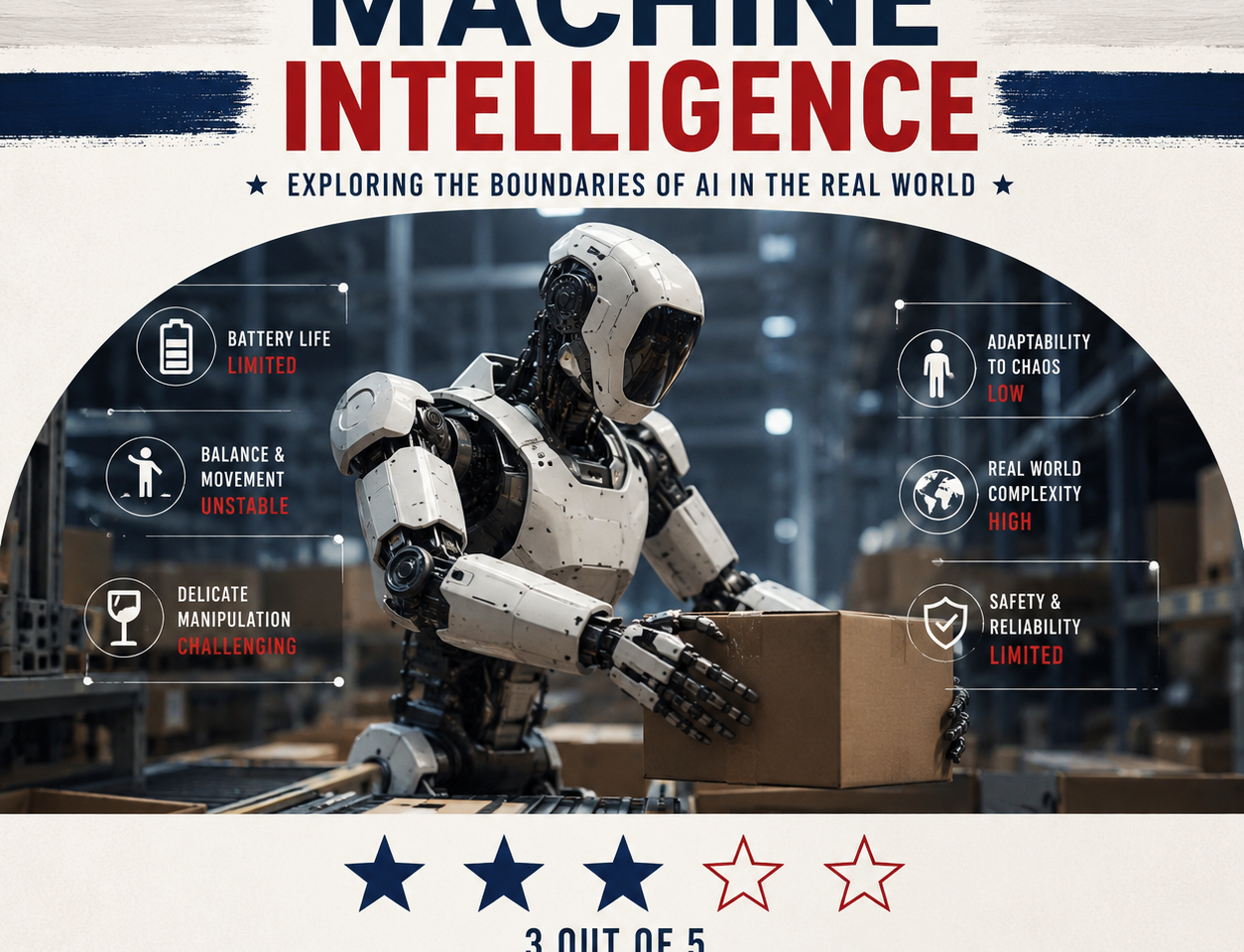
As artificial intelligence becomes increasingly powerful, robotics is exposing a deeper and more uncomfortable reality: intelligence may not simply be computation. The Limits of Machine Intelligence explores why machines still struggle with the physical world — and what this reveals about embodiment, energy, meaning and the future relationship between humans and technology.
Read More
Friday, May 22, 2026
Artificial intelligence is beginning to move beyond screens and software into warehouses, robotics and industrial systems. This article explores how embodied AI could transform logistics, infrastructure, manufacturing and the future relationship between humans and machines.
Read More
Saturday, December 20, 2025

Europe is often portrayed as slow-moving and fragmented in the global technological debate. Headlines from the U.S. and China dominate with news about AI, digital platforms and robotics. But beneath that noise, a different story is emerging: Europe possesses a unique opportunity to renew its industrial strength, and the fashion and manufacturing industries provide a particularly compelling example.
Read More
Saturday, November 29, 2025

Europe is home to some of the world’s most prestigious AI faculties. Institutions like ETH Zürich, the Technical University of Munich, EPFL, Oxford and Cambridge consistently produce research that ranks among the very best globally. Their professors are leaders in fields such as robotics, neuro-symbolic AI and trustworthy AI, attracting top PhD students and forming vibrant hubs of expertise. With such talent and intellectual firepower, Europe should, on paper, be a major force in the AI landscape.
Read More
Friday, November 28, 2025

The Netherlands is not a numerical AI superpower — but it is an influential one. While other countries talk big, the Dutch build the components that keep the global system running. No hype cycles, no billion-dollar theatrics: the strength of the Netherlands lies in precision, infrastructure and reliability.
Read More
Friday, November 28, 2025

Germany does not dominate headlines in the global AI race. It does not chase frontier models with the same fervour as the United States or China. Instead, Germany is building something far more structurally important: an AI-enabled industrial base that underpins Europe’s economic strength—and increasingly, its strategic autonomy.
Read More
