Meta’s $25 Billion Control Problem
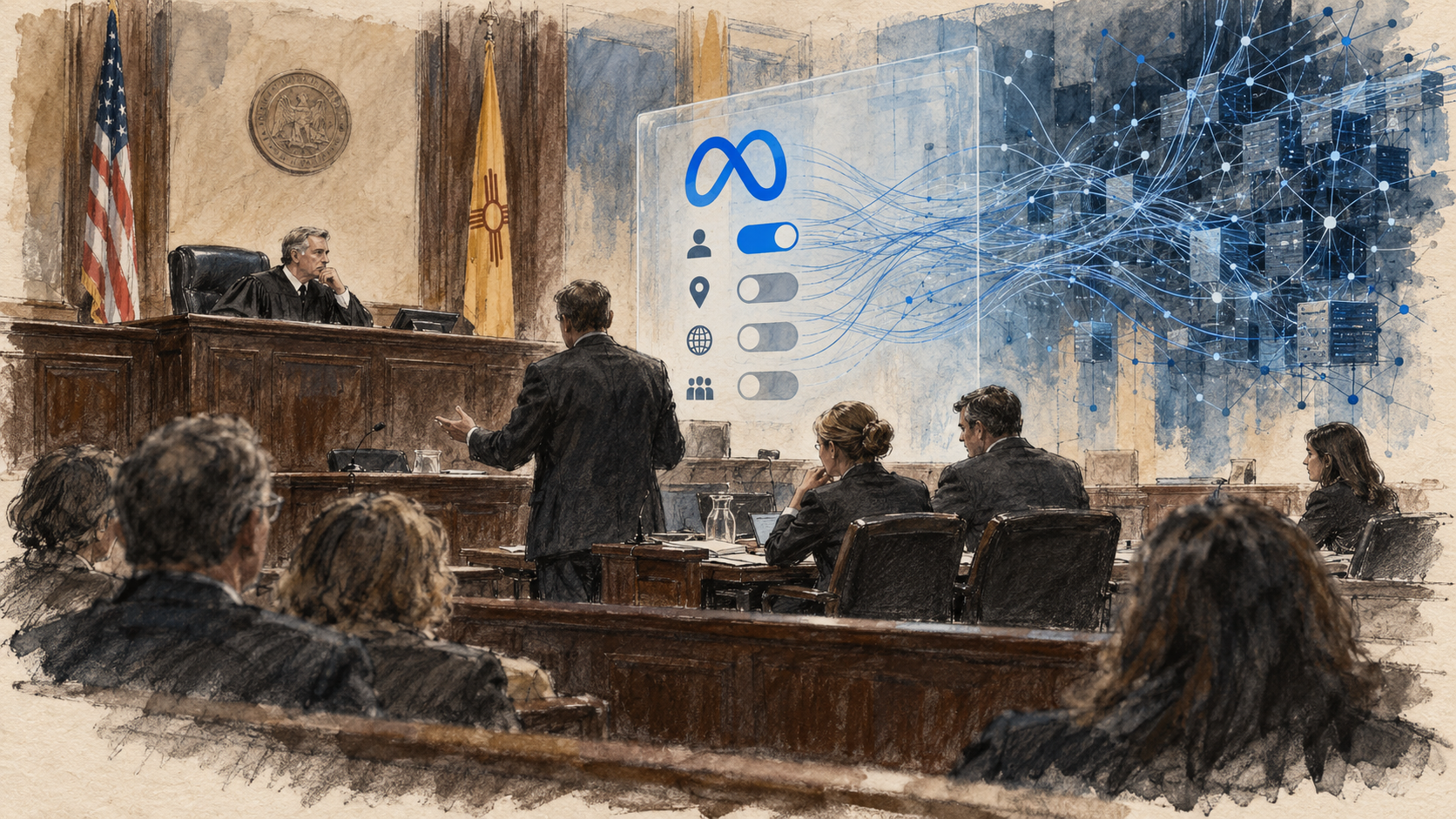
New Mexico has put a price on misleading privacy promises. Whether users gain control will depend on what changes inside the platform.
On October 21, a New Mexico judge ordered Meta to pay $25 billion for misleading Facebook users. The ruling exposes the gap between promised privacy and actual platform practices. With 15% annual interest attached and Meta preparing an appeal, the test is whether financial pressure can produce verifiable control over how personal data is used.
Five questions separate the financial headline from the harder test of platform accountability.
🟦 What exactly is Meta being punished for?
Misleading consumers about how Facebook operated. The case grew out of Cambridge Analytica but extended to statements about personal information, third-party access, misinformation and hate speech. The jury found nearly 44 million violations of New Mexico’s Unfair Practices Act.
The penalty is equivalent to roughly $12,000 per state resident. That comparison illustrates its scale; it was not the court’s calculation method. The award followed findings of repeated statutory violations. Meta contests the ruling, and the proportionality of such a large aggregate penalty is a central issue for appeal.
🟦 Can meaningful privacy coexist with Meta’s commercial incentives?
The tension appears when a privacy choice reduces the information available for advertising. Personalisation can improve relevance, while also creating incentives to collect, combine and infer more about the person receiving an advertisement.
A promise of user control must survive that commercial pressure. Does refusing data combination actually prevent it? Do restrictions extend to profiles inferred from behaviour? Can a setting limit future use of information already collected?
A control panel provides an interface. Establishing control requires evidence about what happens after someone changes a setting.
🟦 Does appealing the ruling buy Meta cheap time?
The judgment makes that calculation more expensive. It imposes annual interest of 15% until the penalty is paid in full. On an unpaid $25 billion principal, that amounts to $3.75 billion a year, before any question of compounding.
Delay therefore carries a potentially substantial price. But interest does not remove Meta’s incentive to appeal: overturning liability or reducing the award could still produce a much larger saving. The financial pressure depends on what ultimately survives judicial review.
The timing problem remains, but this judgment directly challenges the assumption that postponing payment is an inexpensive strategy.
🟦 Does Europe go further into the platform’s design?
The DMA imposes ongoing limits on specified combinations and cross-use of personal data by gatekeepers without valid user consent. For users who refuse, the European Commission requires a less personalised but equivalent alternative. Rewriting privacy terms cannot substitute for meeting those obligations.
In April 2025, the Commission fined Meta €200 million over its then-applicable “consent or pay” model. This was an infringement decision, rather than a provisional estimate of a future penalty.
The distinction matters. New Mexico penalises deceptive representations. The DMA also constrains how designated services may use data. Europe’s challenge is proving that a refusal changes processing throughout the relevant systems.
🟦 What would demonstrate that enforcement has changed the product?
The New Mexico court has reserved its decision on injunctive relief pending further briefing. The financial award therefore leaves a consequential question open: what conduct changes will follow?
Consent records establish what a user agreed to. Auditable systems must establish whether that decision was respected. Regulators need evidence about data flows, access controls and the use of inferred profiles, including where information feeds advertising decisions.
Depending on the practice, effective compliance may require technical separation of data flows. The test is whether prohibited combinations are prevented and that prevention can be independently verified. A clearer explanation of an unchanged system cannot establish that.
Signal
The 15% interest provision gives New Mexico’s judgment additional financial force. Its operational consequences remain unresolved. The next test is whether enforceable penalties and verifiable data restrictions can make user control a demonstrable property of the platform.
Credit
AI-generated editorial illustration by OpenAI / Altair Media.
Caption
Privacy promises meet judicial scrutiny: a conceptual courtroom illustration exploring the gap between visible user controls and the data systems behind them. This image does not depict the actual New Mexico proceedings.
