Tuesday, June 2, 2026

As robots become more capable, the most important questions may no longer be technological. This article explores how societies can balance automation, human responsibility and meaning in a future increasingly shaped by intelligent machines and autonomous systems.
Read More
Friday, May 22, 2026
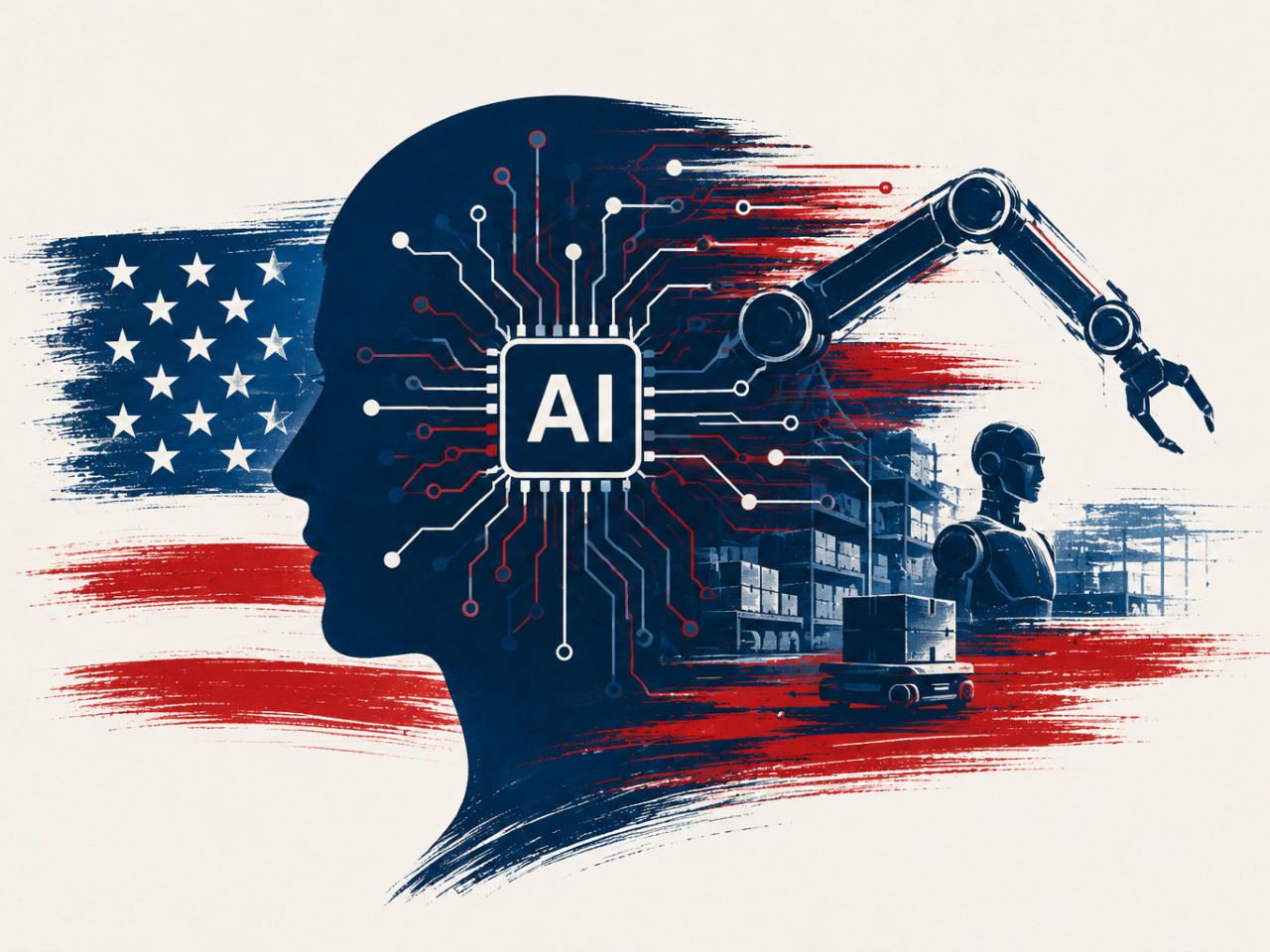
Artificial intelligence is beginning to move beyond screens and software into warehouses, robotics and industrial systems. This article explores how embodied AI could transform logistics, infrastructure, manufacturing and the future relationship between humans and machines.
Read More
Friday, May 22, 2026
AI is moving beyond conversation toward autonomous action. This article explores how AI agents are transforming software into digital labor, reshaping workflows, human supervision and the emerging infrastructure layer of the modern economy.
Read More
Friday, May 22, 2026
AI agents are moving beyond chatbots into autonomous systems capable of planning, coordinating and acting across digital environments. This series explores how the autonomous layer could reshape work, infrastructure, governance and geopolitical power in the emerging AI economy.
Read More
Thursday, February 26, 2026

As AI evolves from chatbots to autonomous agents, fears that software will become obsolete are giving way to a new reality: intelligent systems will depend on existing platforms more than ever, reshaping power in the tech industry and redefining how businesses operate.
Read More
Thursday, January 22, 2026

The iPhone has been the undisputed king of the pocket for nearly two decades, fundamentally transforming the way we live and work. Yet as we transition from the maturation of 5G to the first blueprints of 6G, Apple finds itself at a paradoxical crossroads. The hardware is near-perfect, but the pace of innovation is no longer dictated solely in Cupertino—it is increasingly defined in telecom data centers and the architecture of global networks.
Read More
Monday, January 5, 2026

AI is everywhere. It writes, it predicts, it decides. But as the machines get smarter, one question keeps rising to the top: who is AI really for? The answer many in Silicon Valley now give is Human-Centered AI — AI that serves people, not the other way around. We analysed the people shaping this future: Sam Altman of OpenAI, Satya Nadella of Microsoft and Elon Musk of xAI/Tesla. They don’t always agree, but their messages overlap: AI should enhance human life, not replace it.
Read More
Wednesday, December 3, 2025

AI is often discussed as a technology story, a policy headache or a race between continents. But if you step back, the most useful way to understand its trajectory is surprisingly traditional: the macro–meso–micro framework that economists have used for decades. It turns out to be an elegant map for a technology that is reshaping value creation from the planetary level down to individual workflows.
Read More
Monday, December 1, 2025

Europe does not lack talent. It lacks the gravitational pull to keep it. Across the continent, universities, labs and startups produce some of the world’s strongest AI researchers. Yet the same people often migrate to the U.S. or the UK, pulled by higher salaries, deeper compute access and faster-moving ecosystems. Europe cultivates brilliance, but struggles to convert it into long-term advantage.
Read More
Monday, November 17, 2025

If the past few years felt fast, 2025 is something else entirely. Suddenly everyone is talking about Kosmos, “AI scientists”, autonomous agents and systems that seem to learn, reason and create at unbelievable speed. But for most people, the AI world feels like a maze: many names, many models and very little clarity.
Read More
