The Rise of AI Agents
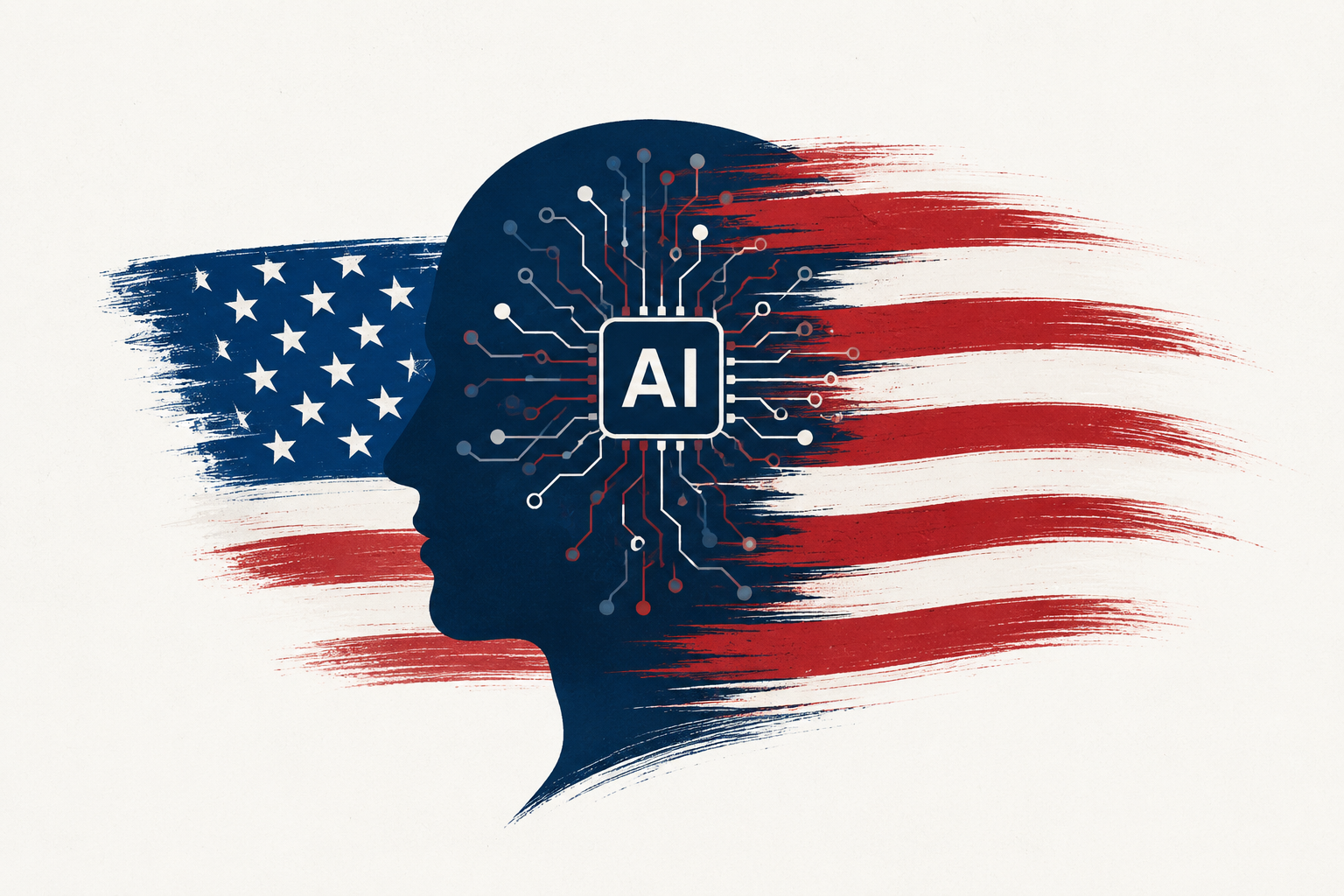
Why AI is moving from conversation to action
Artificial intelligence is entering a new phase. AI is no longer limited to answering questions. Increasingly, it is beginning to execute tasks, coordinate workflows and operate as a semi-autonomous digital worker inside modern organizations.
For most people, artificial intelligence still means a chatbot. A system that answers questions, summarizes documents or generates text on command. But beneath the surface, the architecture of AI is already changing.
The next wave is not centered around conversation. It is centered around action.
Technology companies are rapidly building what the industry now calls AI agents: systems capable of planning tasks, interacting with software, retrieving information, making decisions within defined boundaries and coordinating actions across digital environments. Instead of simply producing outputs, these systems increasingly operate like digital employees.
The shift may appear subtle. In reality, it changes the role of software itself.
From Tools to Actors
Traditional software behaves like an instrument. A spreadsheet calculates. A database stores information. A chatbot responds to prompts. Humans remain fully responsible for directing every step.
AI agents operate differently.
An agent can receive a goal rather than a single instruction. Instead of asking:
“Write me a summary,”
a user may eventually ask:
“Prepare a market briefing, schedule the meetings, compare competitors and send the report before tomorrow morning.”
The system then breaks the task into smaller actions, retrieves information, coordinates tools and executes workflows with limited human involvement.
A customer-support chatbot answers questions.
An AI agent may eventually retrieve account information, process refunds, schedule follow-ups and escalate unusual cases to human supervisors automatically.
The difference is not simply intelligence. It is operational autonomy.
More importantly, agents increasingly operate through feedback loops. A traditional chatbot stops once it generates an answer. An AI agent evaluates the outcome of its actions, adjusts its approach and attempts new solutions when something fails. This ability to observe, adapt and retry is what moves AI from conversation toward action.
This is why many technology leaders believe AI is moving beyond software tools toward something closer to digital labor.
“AI agents will become the primary way people interact with computers.”
Satya Nadella, CEO, Microsoft
The transition resembles an important historical shift. Early computers automated calculations. The internet automated information exchange. AI agents may automate parts of operational decision-making itself.
Why This Is Different From ChatGPT
Systems like ChatGPT introduced millions of people to generative AI. But most large language models remain reactive. They generate responses after receiving prompts.
Agents add several new layers:
- Memory
- Task planning
- Tool usage
- Workflow execution
- Persistent objectives
- Feedback and self-correction
This creates a fundamental difference between conversation and agency.
A chatbot helps write an email.
An agent may organize an entire sales pipeline.
A chatbot explains a legal document.
An agent may eventually prepare filings, schedule compliance deadlines and coordinate communication between departments.
The result is not simply smarter software. It is software that increasingly behaves like a junior operator inside organizations.
Which Tasks Will AI Agents Take Over?
The first wave of AI agents is already entering administrative and digital environments where work follows structured workflows.
Areas likely to change rapidly include:
- Scheduling and coordination
- Customer support
- Internal reporting
- Market research
- Software testing
- Document management
- Procurement
- Financial administration
- Logistics planning
Large parts of white-collar work involve repetitive coordination between systems, documents and communication channels. These are precisely the environments where AI agents perform well.
This does not necessarily mean mass replacement overnight. More likely, organizations will gradually redesign workflows around smaller teams supervising larger layers of automated systems.
“The real transformation comes when AI starts doing things, not just saying things.”
Jensen Huang, CEO, NVIDIA
The impact may resemble industrial automation in manufacturing — but applied to cognitive labor.
The Rise of Human Supervision
Paradoxically, more autonomy may increase the importance of human oversight.
As agents become capable of acting independently, organizations will need people who:
- monitor decisions;
- validate outputs;
- define ethical boundaries;
- manage exceptions;
- intervene when systems fail.
New roles are already emerging around:
- AI orchestration;
- workflow supervision;
- AI governance;
- compliance;
- human-in-the-loop operations.
As AI increasingly performs operational labor, the role of humans may gradually shift from executor toward supervisor, architect and institutional decision-maker.
The future workplace may not separate humans and AI systems. Instead, it may revolve around coordination between them.
This is especially important because AI agents remain probabilistic systems. They do not “understand” the world in a human sense. They predict likely outcomes based on patterns.
That creates a growing governance challenge.
The Black Box Problem
The more autonomous AI systems become, the harder it may become to fully explain their decisions.
This is often described as the “black box problem”.
A traditional software system follows explicit rules written by programmers. AI systems instead generate outcomes through highly complex statistical processes that even developers may struggle to fully interpret.
When AI only generates text, this problem is manageable. But when AI agents begin handling financial operations, healthcare administration, legal workflows or public infrastructure, explainability becomes far more important.
Who becomes responsible when an autonomous system makes the wrong decision?
The question is no longer theoretical.
Governments, regulators and companies are now confronting a future where AI systems may influence hiring, insurance, logistics, security and access to services — often with limited transparency.
At the same time, the organizations controlling these agentic infrastructures may increasingly shape the operational standards of entire industries. The future of AI may therefore not simply become a technological debate, but also a question of institutional and economic power.
The Beginning of the Autonomous Layer
The rise of AI agents marks the beginning of a broader transformation inside the digital economy. Artificial intelligence is slowly evolving from a passive interface into an operational infrastructure layer capable of coordinating actions across organizations and networks.
The long-term implications remain uncertain. Some tasks may disappear. New professions will emerge. Entire management structures may change.
But one thing is increasingly clear: The next phase of artificial intelligence will not be defined by systems that merely talk. It will be defined by systems that act.
The rise of AI agents may therefore represent more than a software evolution. It may mark the beginning of a new operational layer between humans, institutions and infrastructure itself.
In the next part of this series, Altair Media US examines how AI agents are moving beyond screens into robotics, logistics and the physical economy — and why the boundary between software and machines is beginning to disappear.
This article is part of The Autonomous Layer — an Altair Media US series exploring how AI agents, autonomous systems and intelligent infrastructure are reshaping work, governance and geopolitical power in the emerging AI economy.
Credit
Illustration generated by OpenAI for Altair Media US
Caption
A minimalist interpretation of the emerging autonomous layer, where artificial intelligence evolves from conversational software into operational infrastructure shaping work, systems and society.
