
Quantum computing does not scale through performance, but through stability. As error becomes the baseline, the cost of sustaining computation rises—turning access into an economic filter and concentrating power among those who can afford to control instability.
Latest Articles
Independent reporting and analysis on how markets, technology and economic developments evolve across the United States and the global economy.

Quantum computing is not a standalone machine, but a vertically integrated system where control determines capability. As instability becomes the baseline, value concentrates in the layers that can stabilize, coordinate and ultimately control access to computation itself.

Quantum computing is not about speed, but about redefining solvability. As classical limits emerge, a new constraint layer forms—where access to computation becomes selective and control shifts toward those who can stabilize and operationalize the unstable.

In six months, over $13 billion flowed into optical technologies — not as a bet on innovation, but as a response to a growing constraint. As AI systems scale beyond the limits of copper, the real bottleneck is no longer compute, but the ability to move data. The race is shifting from GPUs to the optical supply chain that connects them.
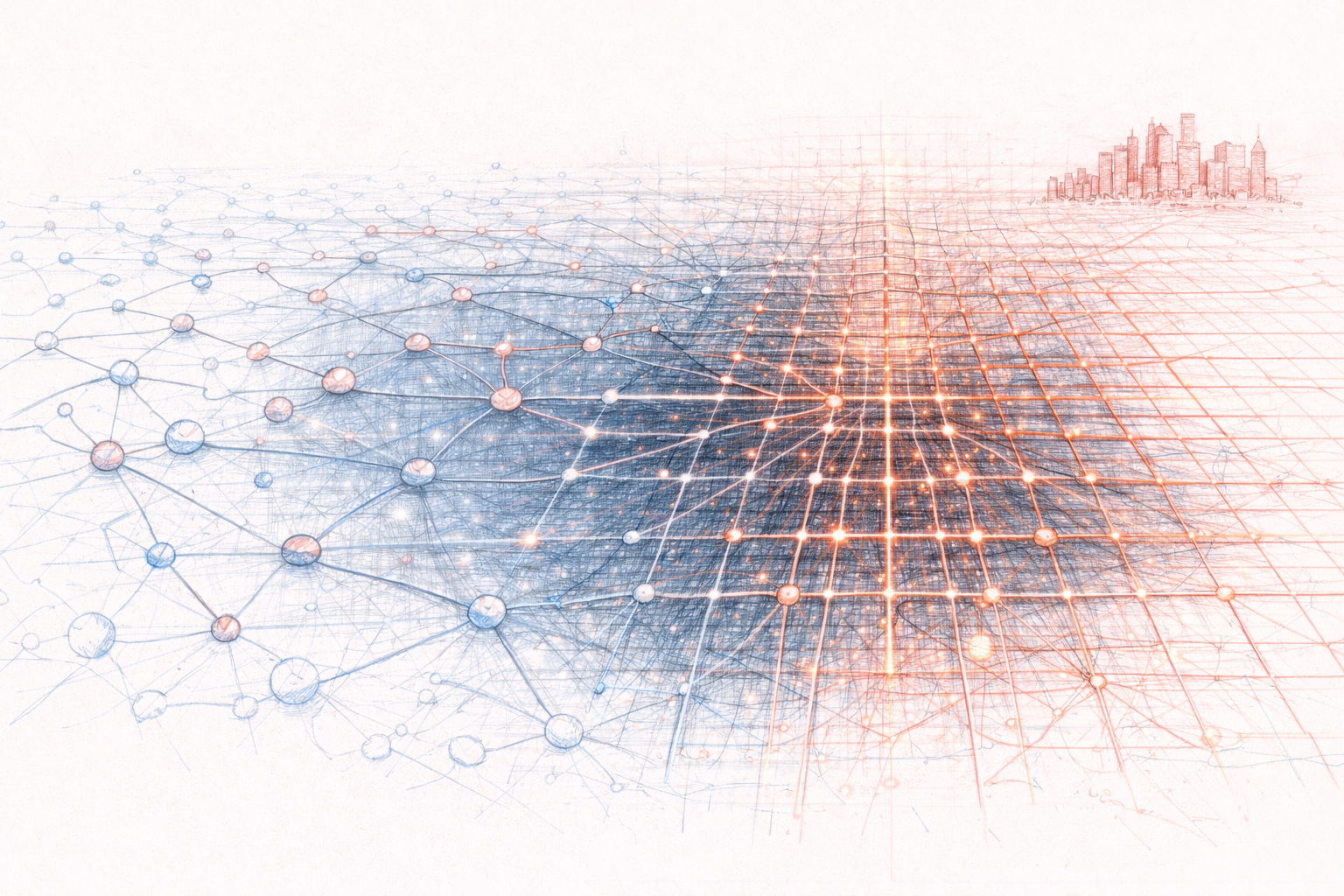
Markets still focus on companies, but the next decade will be shaped by systems. As AI, energy and supply chains converge, value shifts toward infrastructure layers that economies cannot function without, redefining how investors should think about risk and opportunity.

Systems no longer wait for input — they anticipate behavior. As prediction becomes the default, decisions are shaped before they are made, narrowing choice through optimization and quietly redefining how people navigate information, markets and everyday life.
