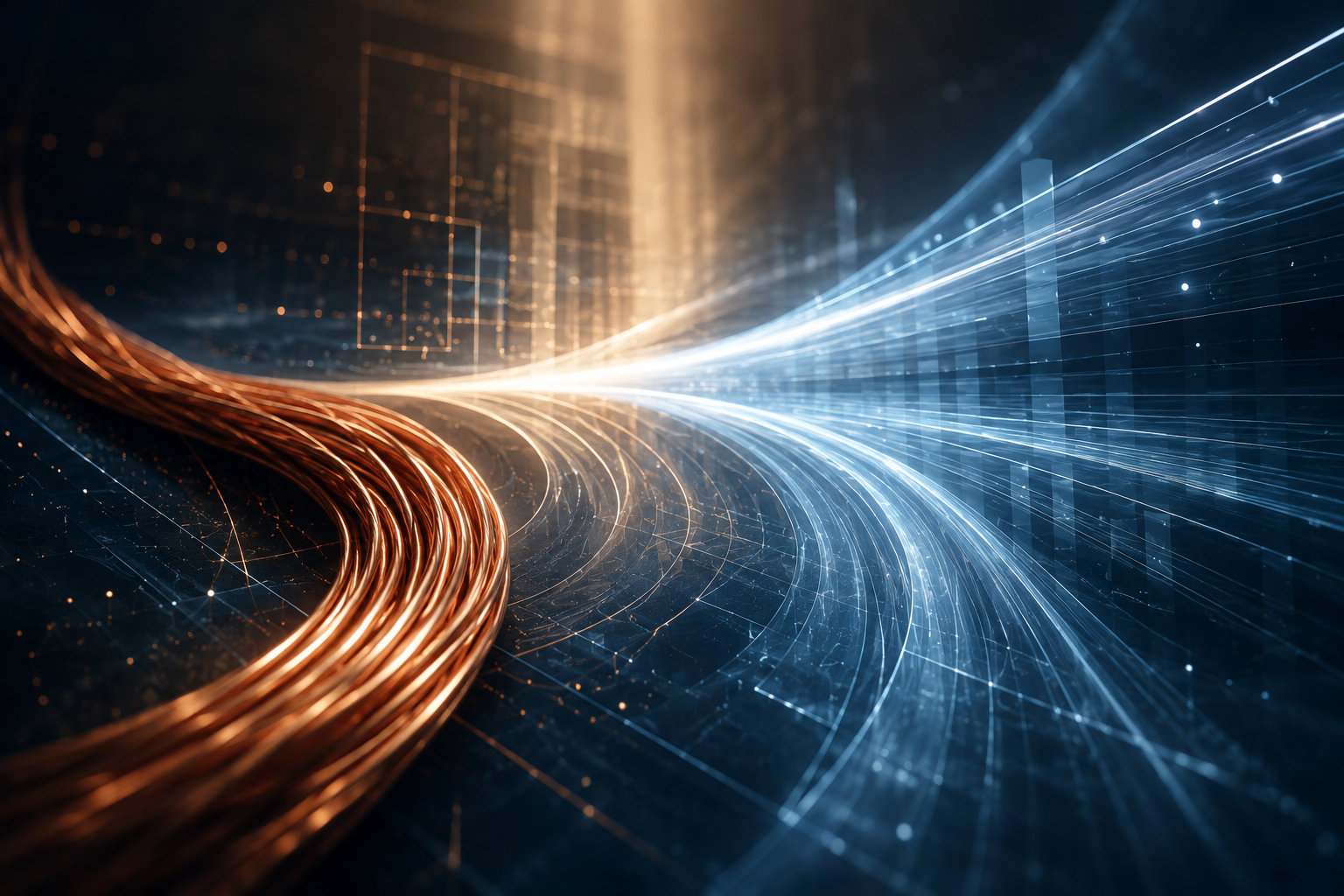
Artificial intelligence may not be running out of ideas, but it may be approaching the practical limits of electrons. As communication becomes increasingly expensive, the future of computing may depend less on processing information and more on moving it efficiently.
Light After Electricity
Rethinking Computation in an Age of Energy Limits
For decades, progress in computing meant making transistors smaller. Today, the challenge is increasingly different. Modern processors are becoming so powerful that moving information between them consumes almost as much energy as computing itself.
The future of artificial intelligence may therefore depend less on better algorithms and more on an older phenomenon: light. The question is no longer whether photonics works. The question is whether it can scale before electricity becomes the limiting factor of the AI age.
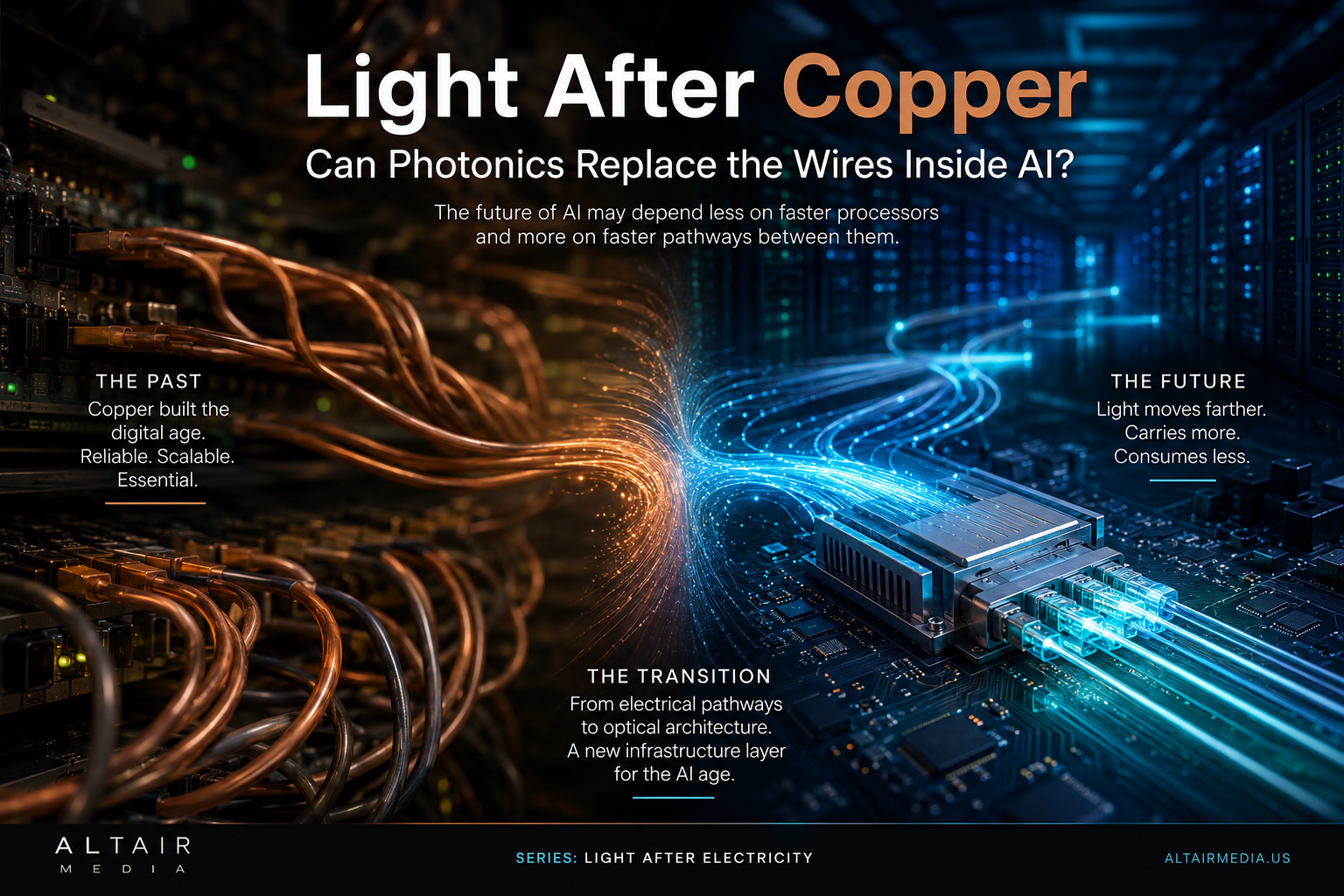
Artificial intelligence is transforming datacentres from collections of processors into vast communication systems. As copper approaches its practical limits, integrated photonics may become the next infrastructure layer enabling the continued scaling of AI.
Credit
Illustration: Altair Media / AI-generated visualisation
Caption
Abstract interpretation of the transition from electrical to optical computing, where copper pathways gradually give way to streams of light. The image symbolises the emerging role of integrated photonics in an age increasingly constrained by energy, heat and data movement.
