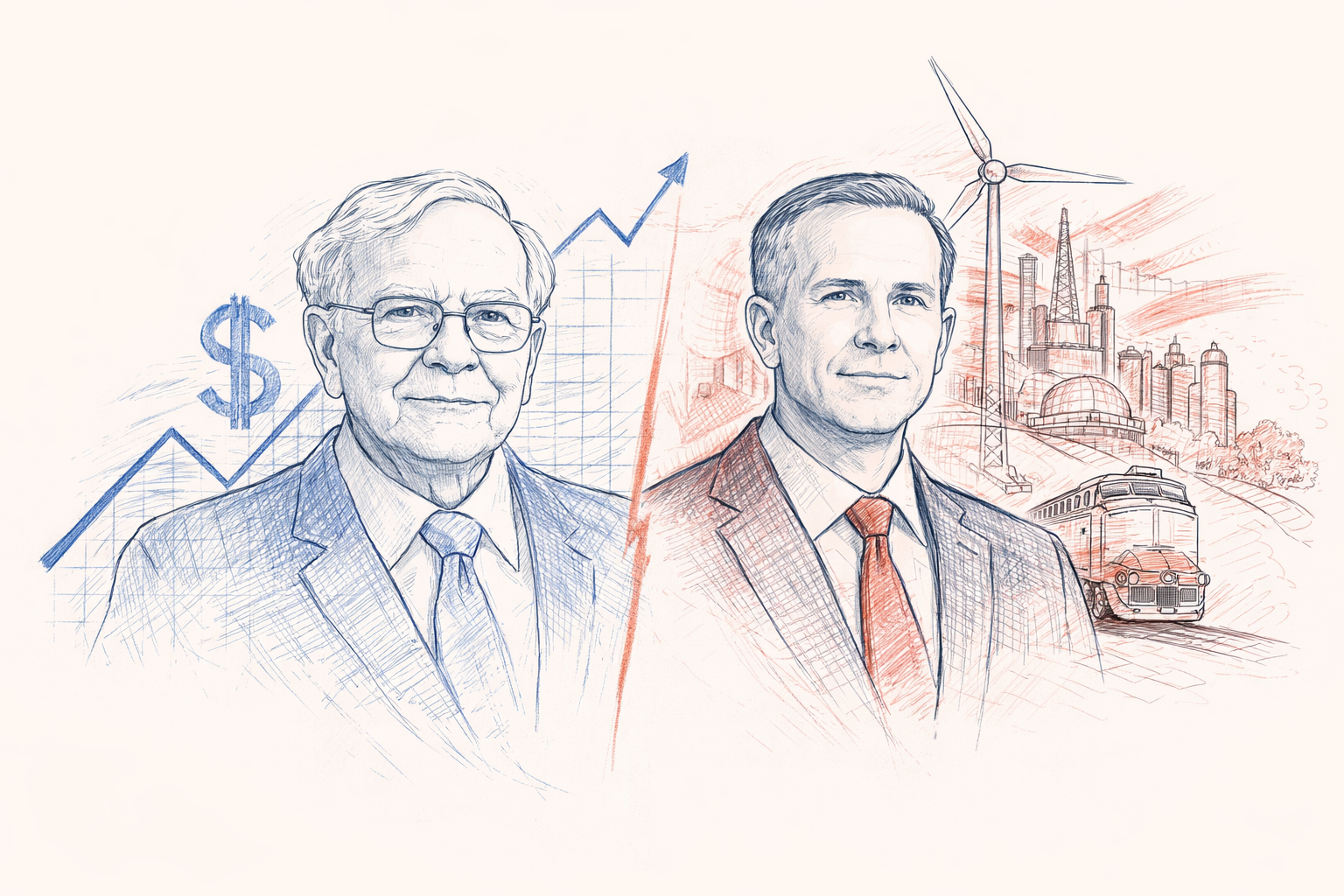
A leadership transition at Berkshire Hathaway signals something deeper. As Greg Abel steps forward, capital allocation is shifting from individual judgment to system design — where infrastructure, energy and networks increasingly define how long-term economic value is created.
The Infrastructure Shift – Greg Abel and the Rewiring of Capital

From iconic leadership to system-driven capital allocation
A generational transition at Berkshire Hathaway signals more than succession. As Greg Abel takes a central role, capital is increasingly directed toward systems — energy, infrastructure and networks that quietly redefine how economic power is built and sustained.
For decades, Berkshire Hathaway reflected the investment philosophy of Warren Buffett — disciplined, intuitive and deeply rooted in American industry. Yet beneath that surface, a different structure was already taking shape. Railroads, energy utilities and industrial systems formed a quiet backbone.
Greg Abel does not mark a break from that legacy, but a continuation of its underlying logic. What changes is the visibility of that logic. Capital is no longer primarily allocated to companies as standalone entities, but to interconnected systems that enable economies to function.
This shift aligns with a broader transformation explored in The Infrastructure Age: modern economic power increasingly resides in networks — physical, digital and financial. What appears as succession is, in reality, a structural transition.

Berkshire Hathaway is often seen as a collection of companies. In reality, it operates as a system of infrastructure assets — railroads, energy grids and networks that form the invisible backbone of the economy and enable long-term capital compounding.

Infrastructure is no longer a sector — it is the underlying system of the economy. As energy, data and logistics converge, value shifts from companies to the networks they depend on, redefining how power and capital are structured.

Markets still focus on companies, but the next decade will be shaped by systems. As AI, energy and supply chains converge, value shifts toward infrastructure layers that economies cannot function without, redefining how investors should think about risk and opportunity.
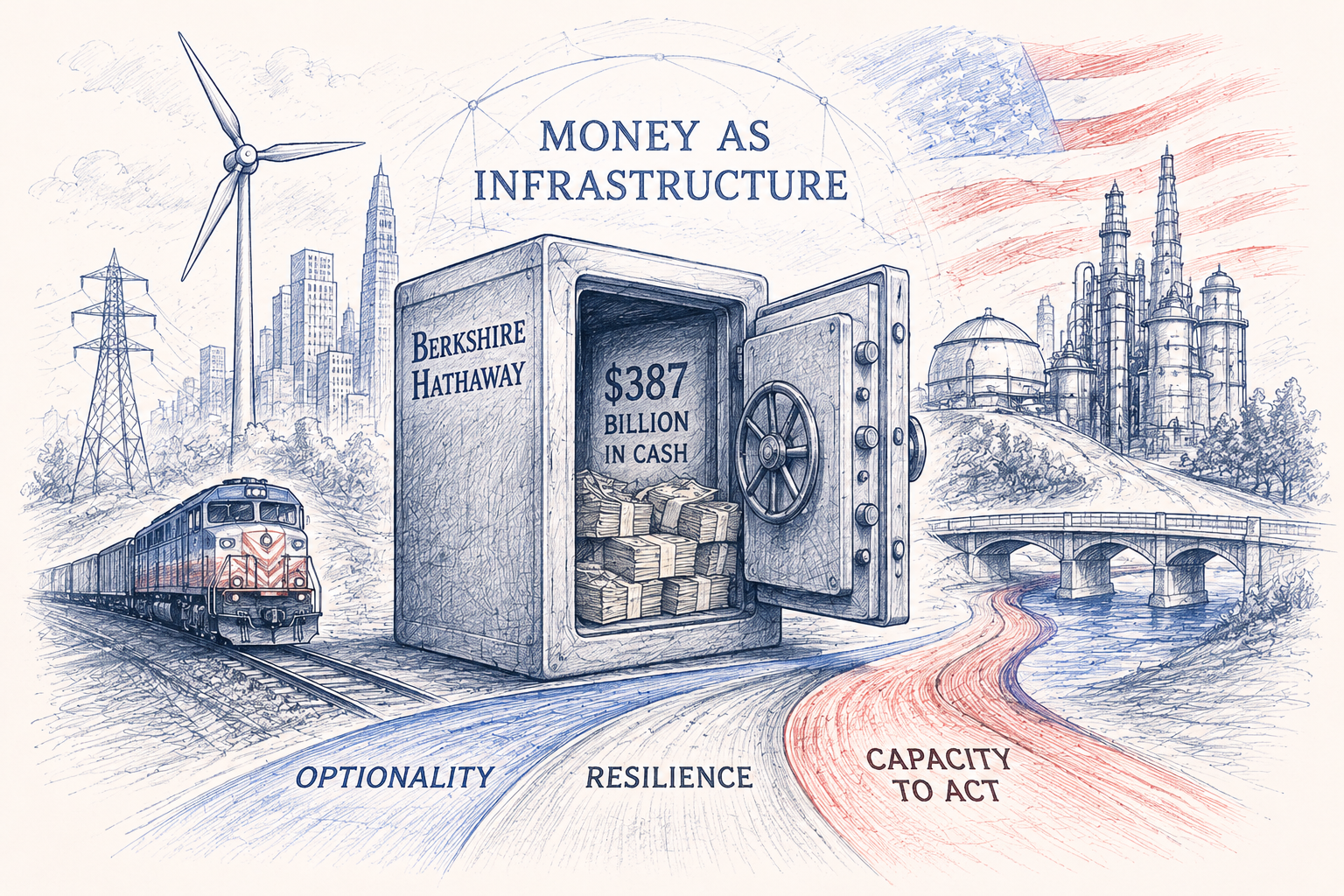
Berkshire Hathaway’s vast liquidity is often interpreted as caution. Yet in an age increasingly defined by uncertainty, cash may represent something more profound: reserve capacity, strategic optionality and the ability to act when resilience becomes more valuable than efficiency.
