Greg Abel and the End of Personality Capitalism
Part 1 — The Quiet Succession
The most important transition at Berkshire Hathaway is not about leadership — it is about the nature of capital itself.
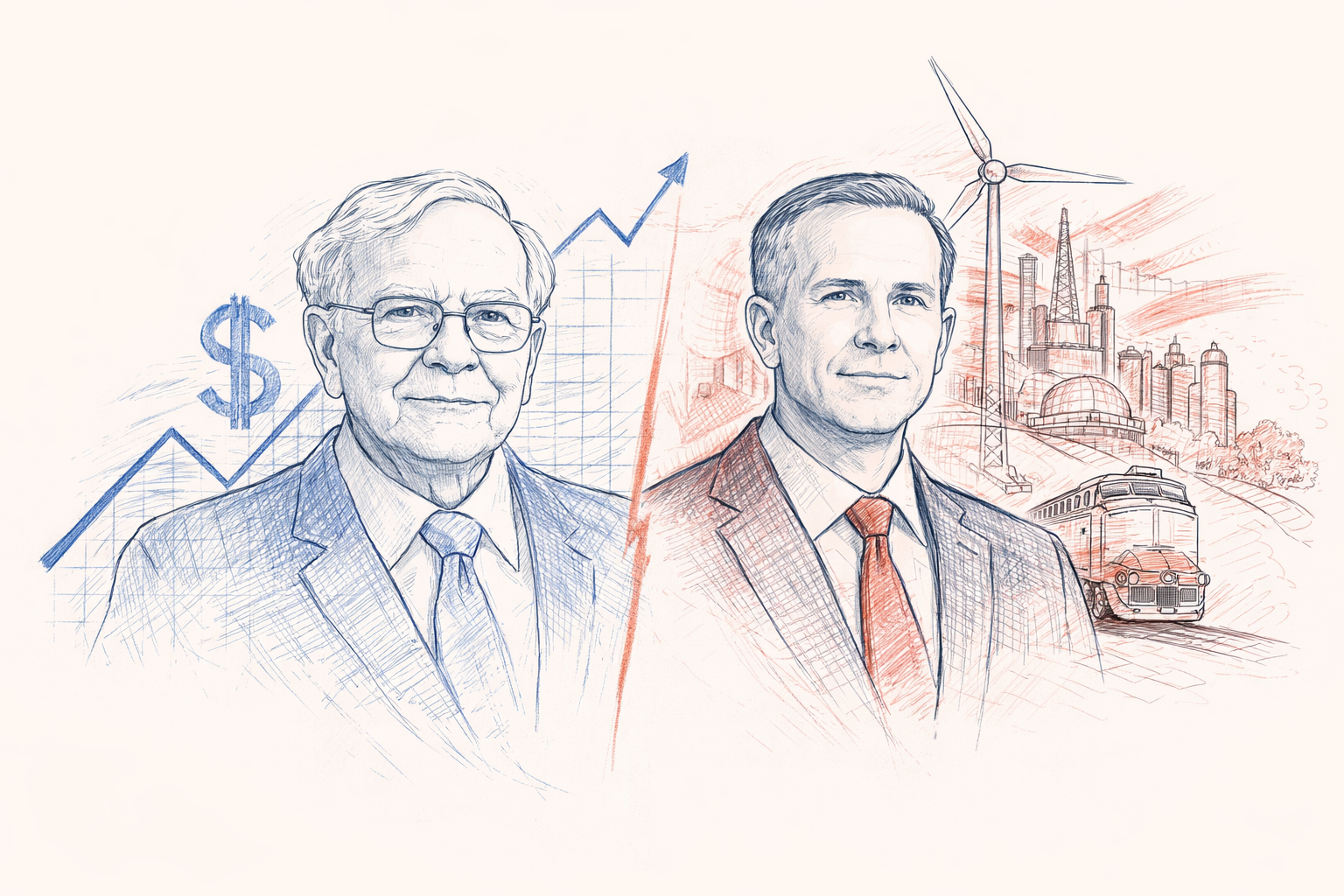
For decades, Warren Buffett represented a form of capitalism built on individual judgment. Capital allocation was an extension of personality — disciplined, intuitive and, above all, human.
That model is quietly changing.
With Greg Abel stepping forward, Berkshire Hathaway is becoming less dependent on individual insight and more aligned with operational systems. Abel is not known as a market oracle, but as a builder and operator of complex infrastructure — particularly in energy and utilities.
This distinction matters.
The center of gravity is shifting from selecting businesses to managing systems. Railroads, energy grids and industrial networks are no longer just investments; they are the structure through which capital compounds.
Closing insight
What appears to be succession is, in reality, a deeper transition: from personality-driven capitalism to system-driven allocation. And markets have only begun to recognize the difference.
This is not the end of Buffett’s legacy.
It is the moment that legacy becomes structural.
This article is part 1 of The Infrastructure Shift – Greg Abel and the Rewiring of Capital, a series exploring how infrastructure, energy and systems are reshaping capital allocation.
The broader framework is explored in The Infrastructure Age.
Credit:
Illustration by Altair Media (AI-assisted)
Caption:
Warren Buffett and Greg Abel represent a transition from personality-driven investing to system-based capital allocation.
